Core Image, Chapter 1. The Oracle Method for Images
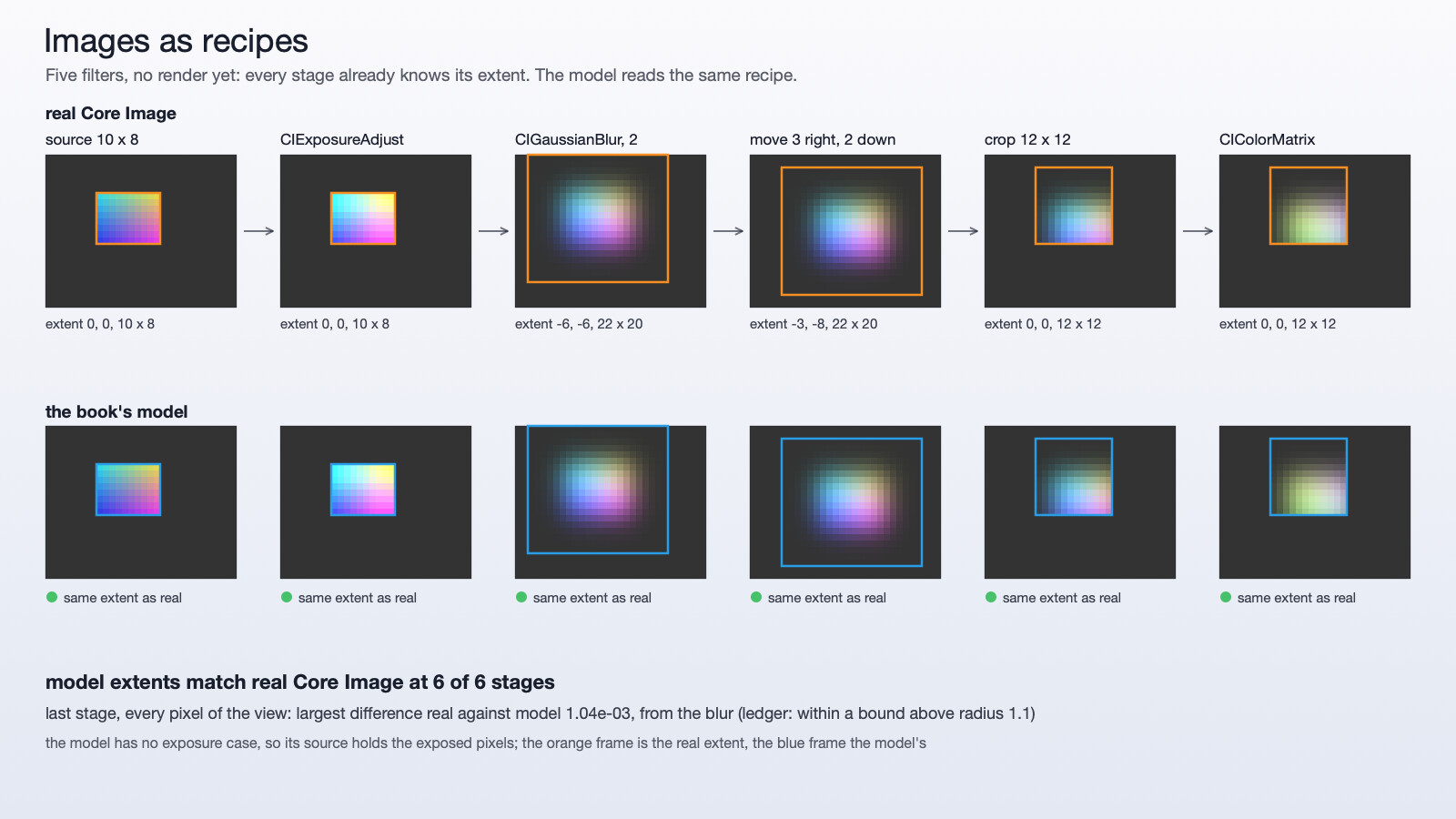
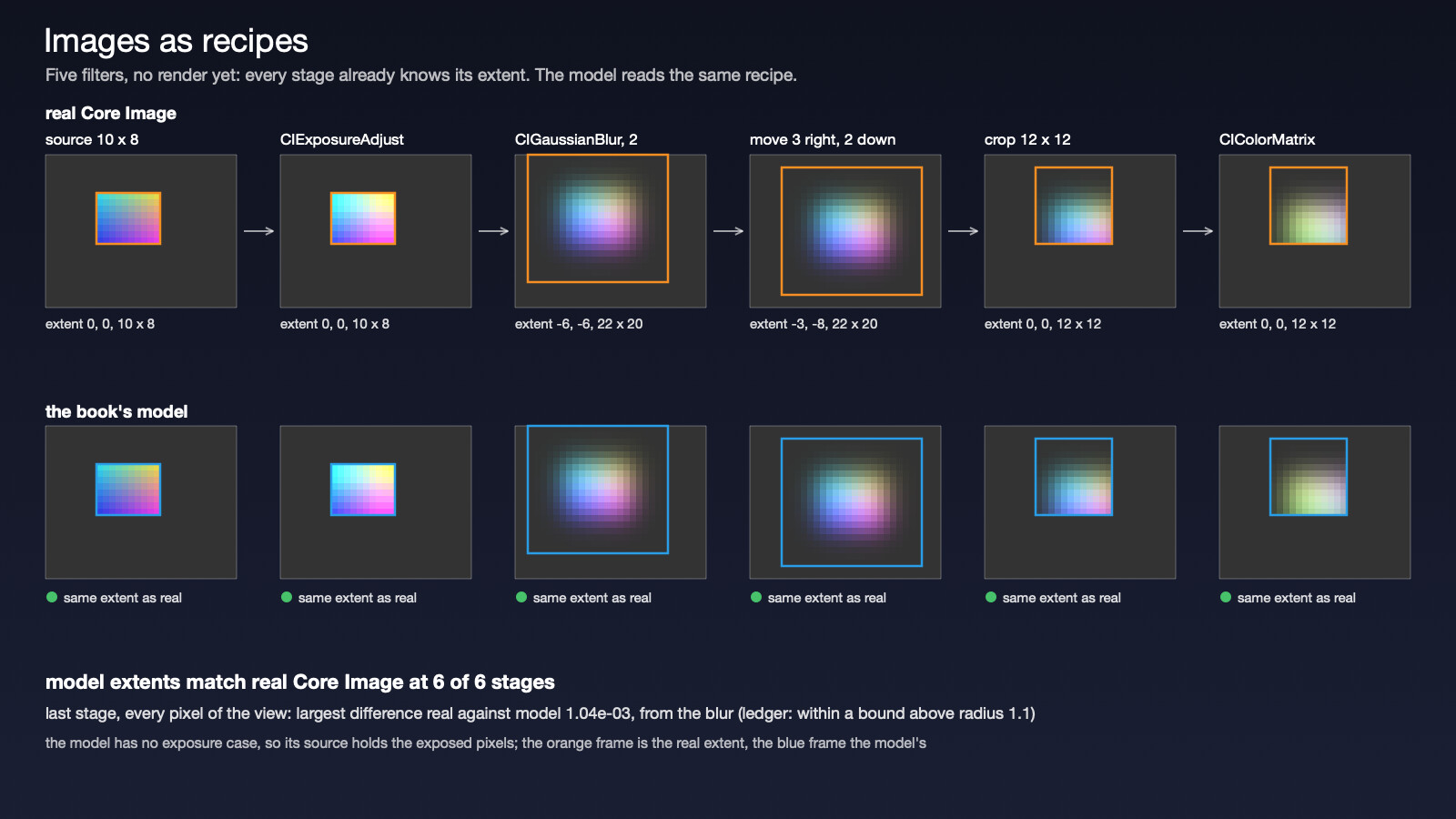
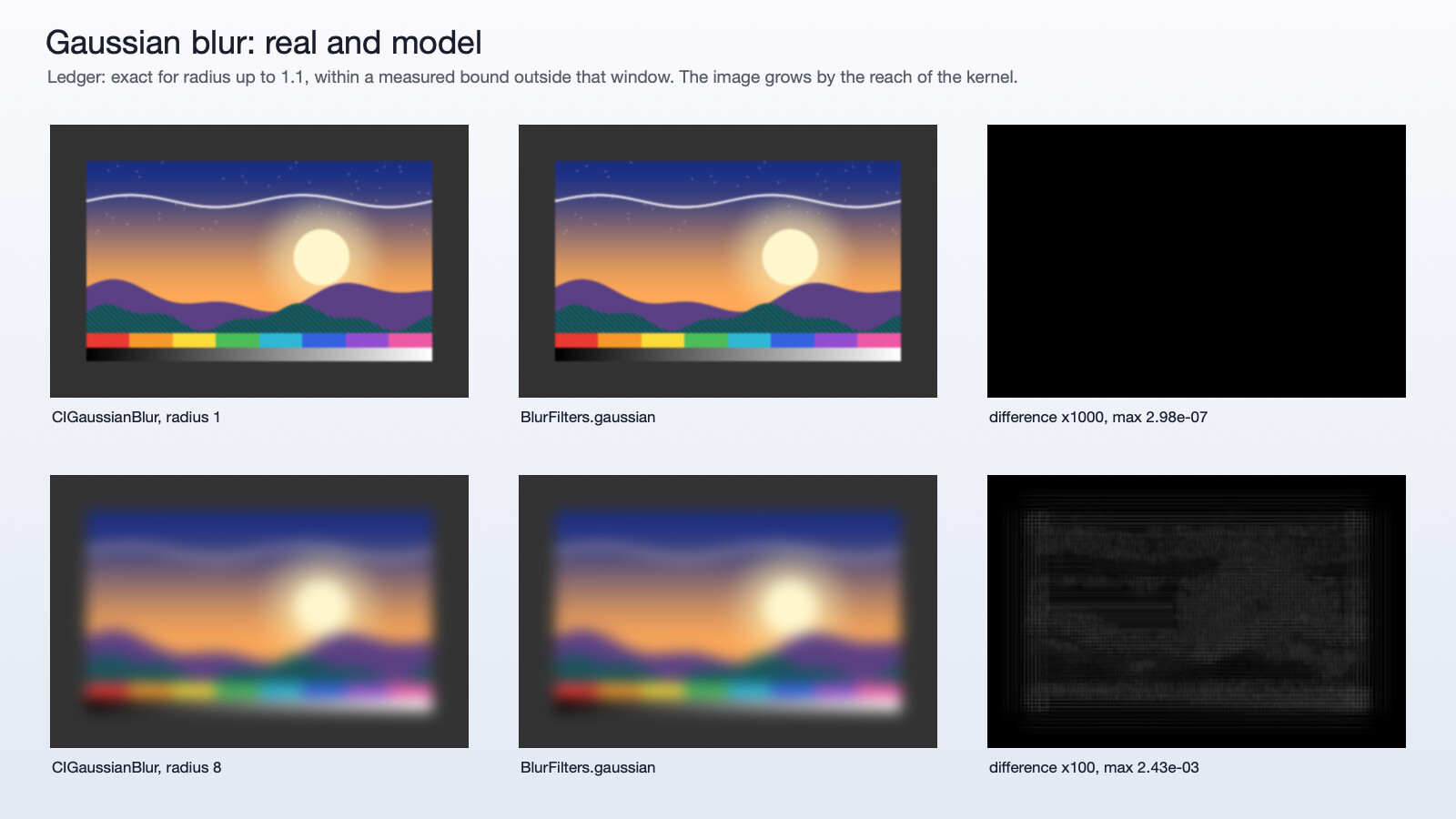
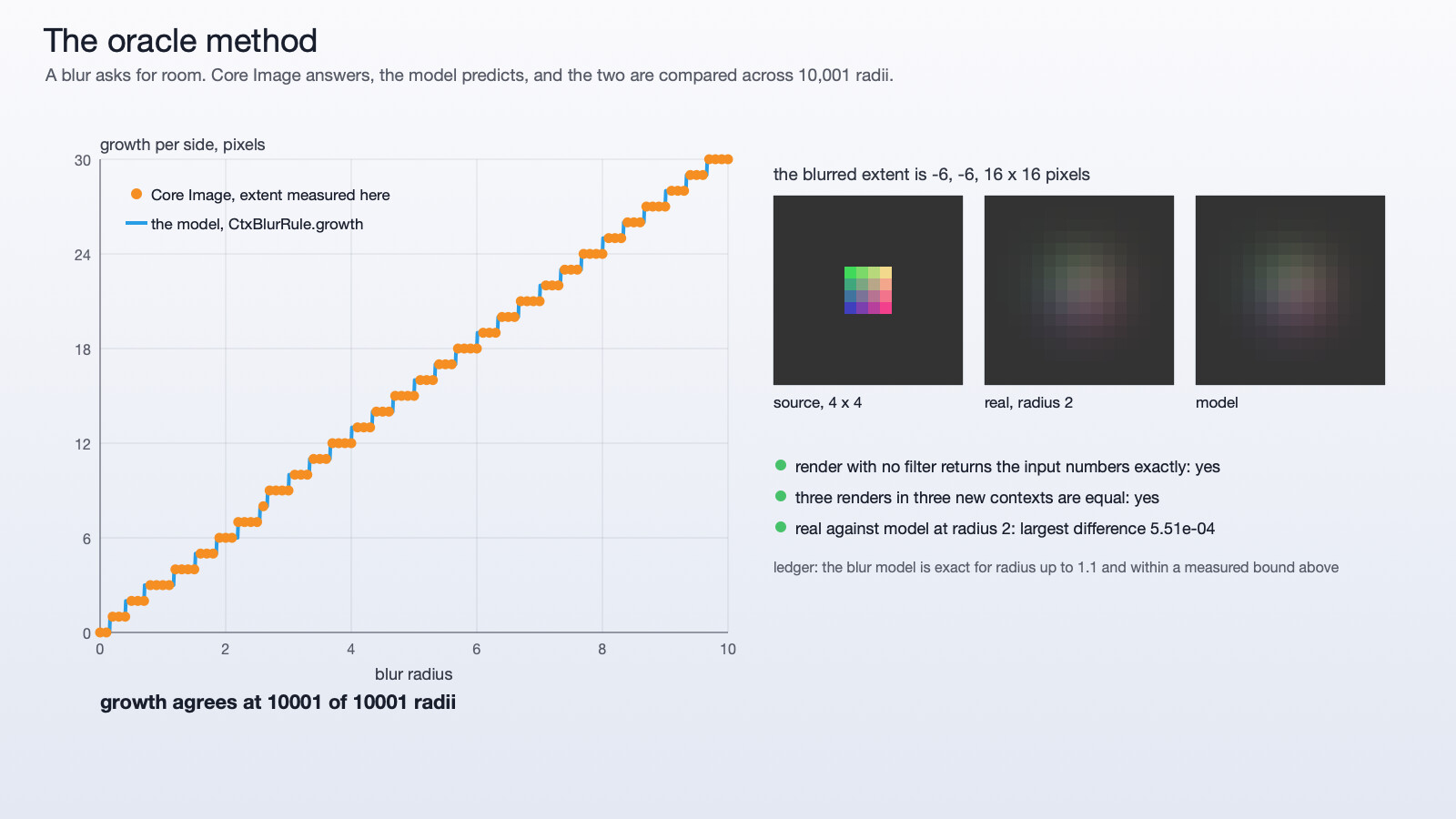
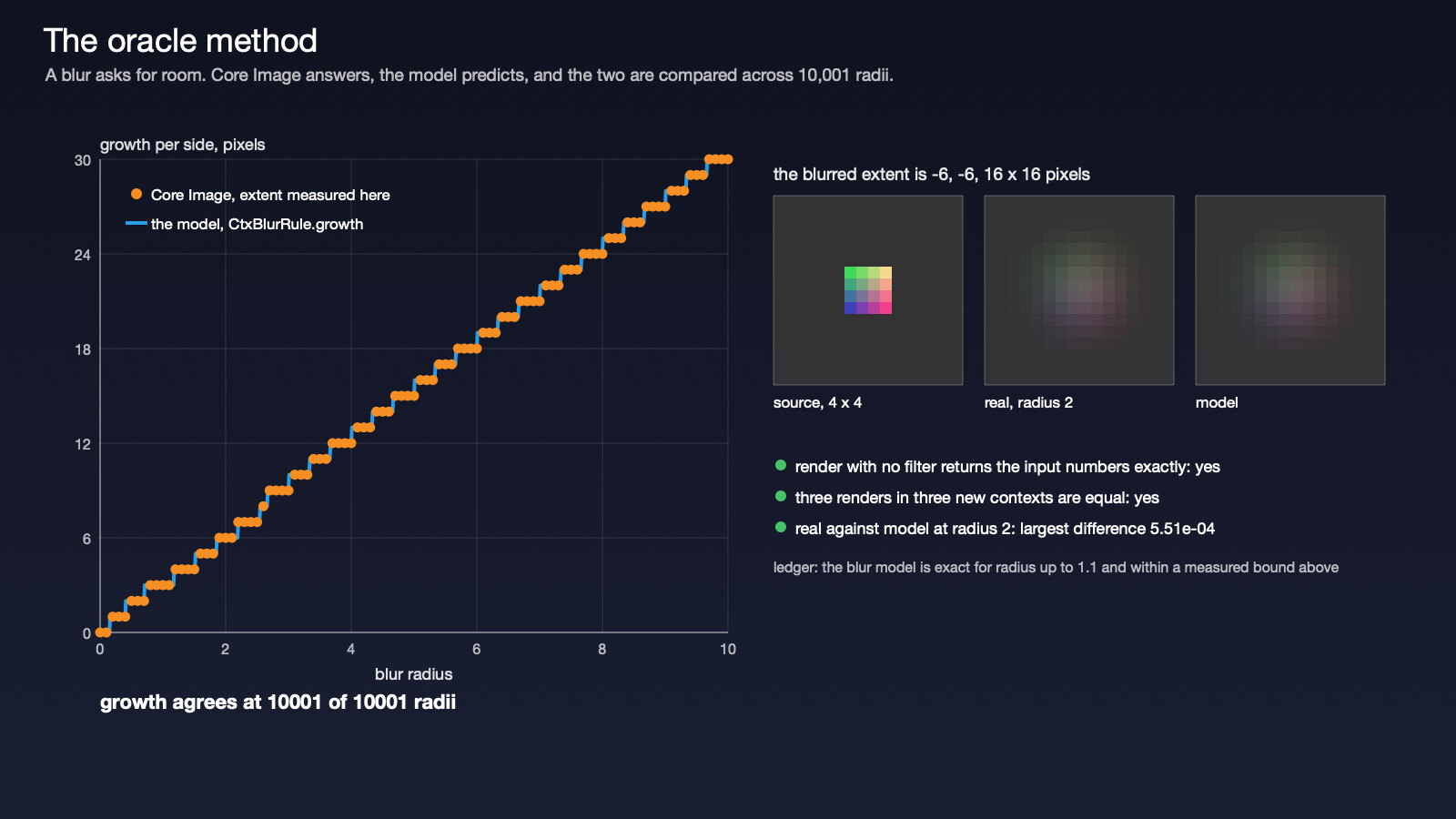
A blur as an answer key, and the extra room that a filter asks for.
A blur as an answer key, and the extra room that a filter asks for.
You will be able to say what a Core Image picture really is: not a grid of pixels, but a recipe that says how to make them.
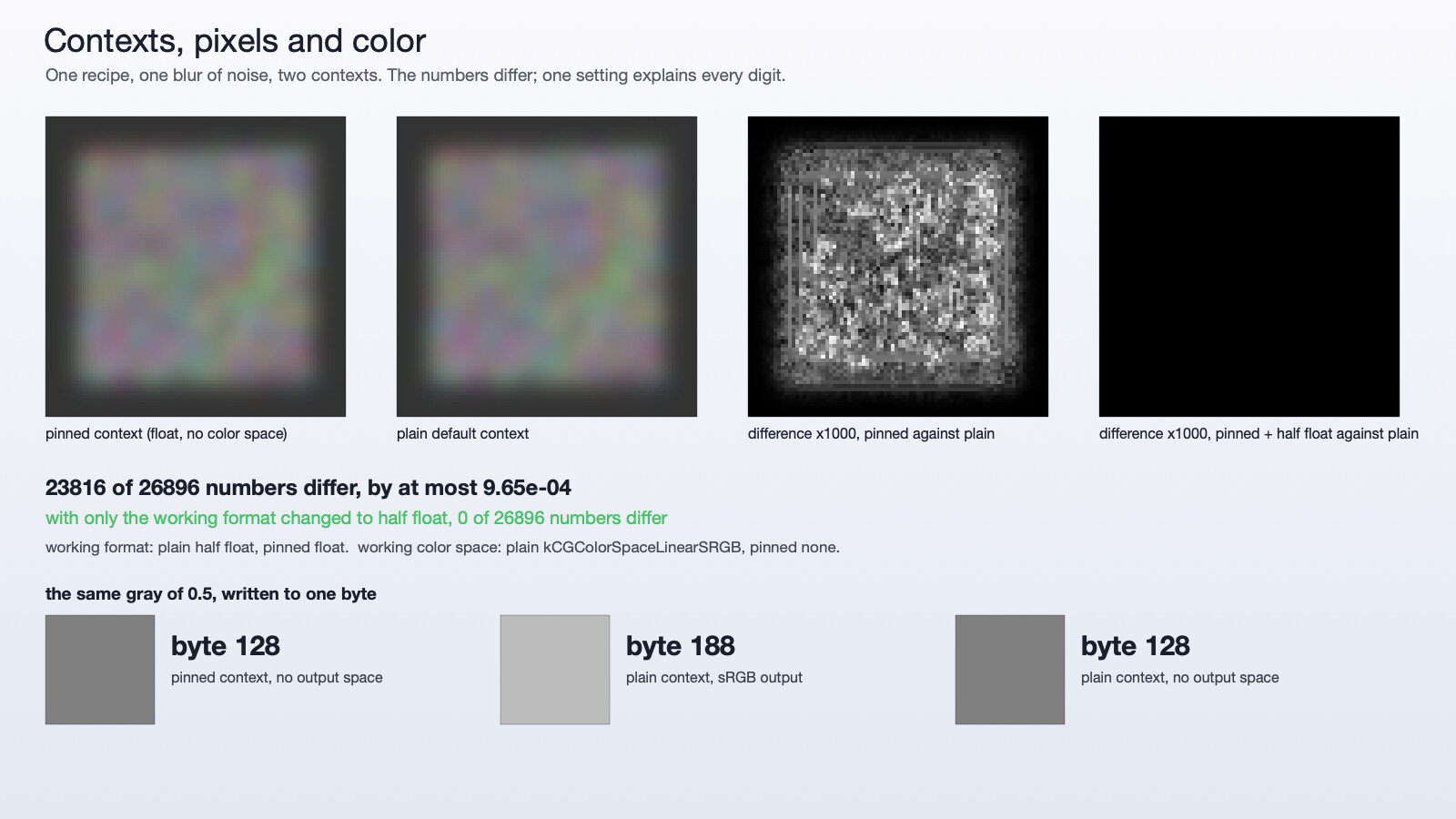
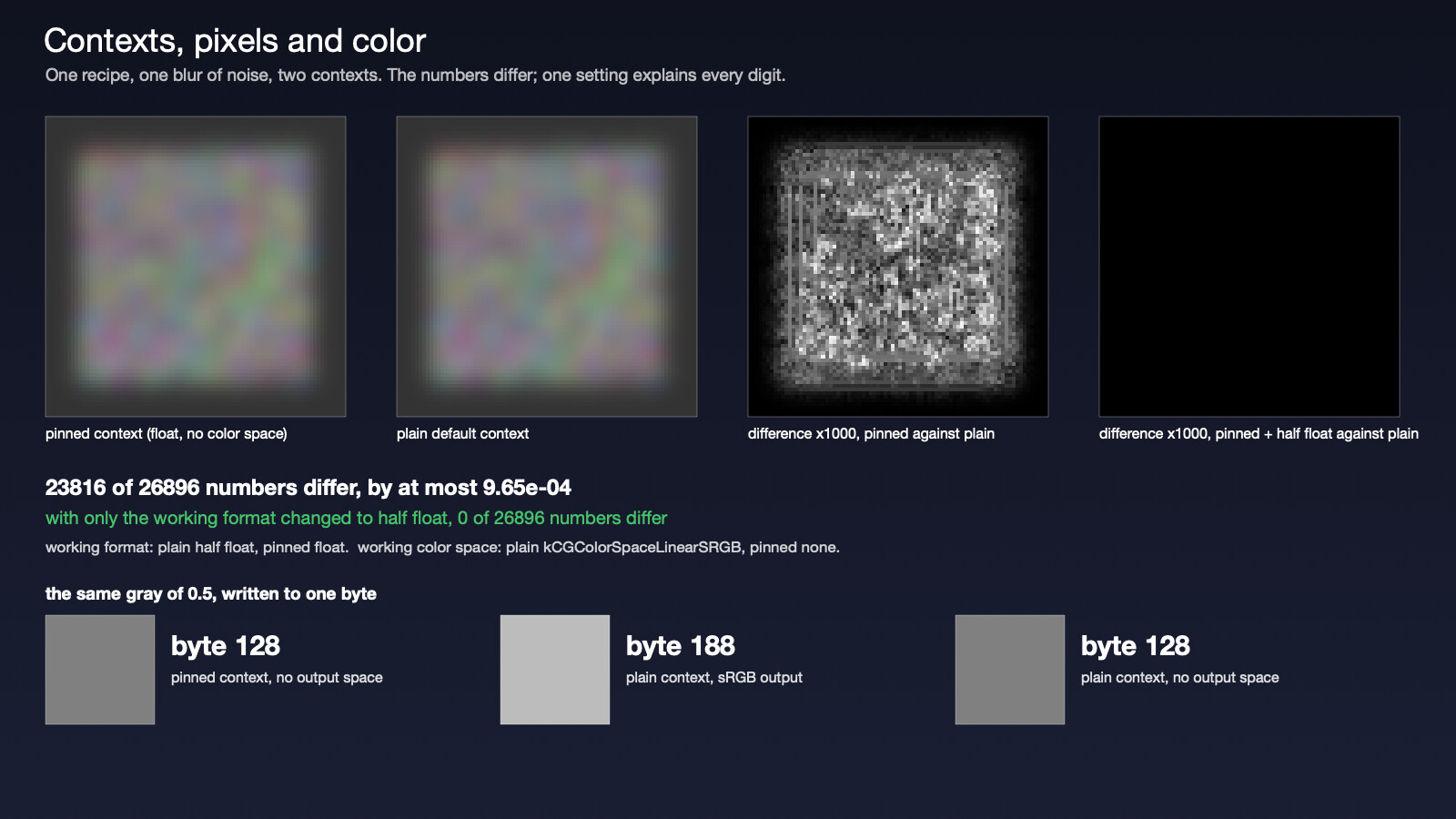
You will be able to say what a context is, and what a render of a rectangle writes: floats, half floats or bytes, row by row.
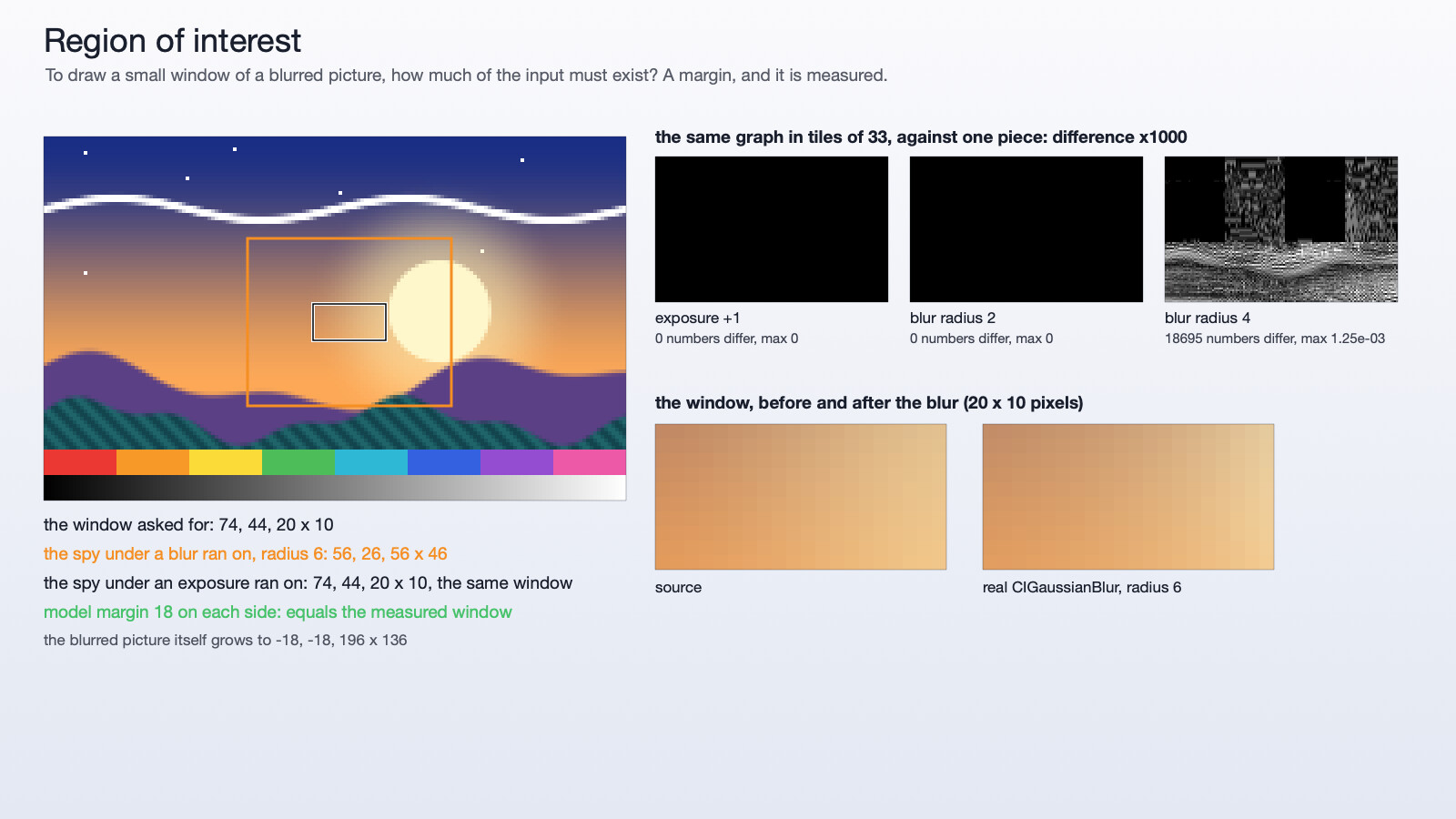
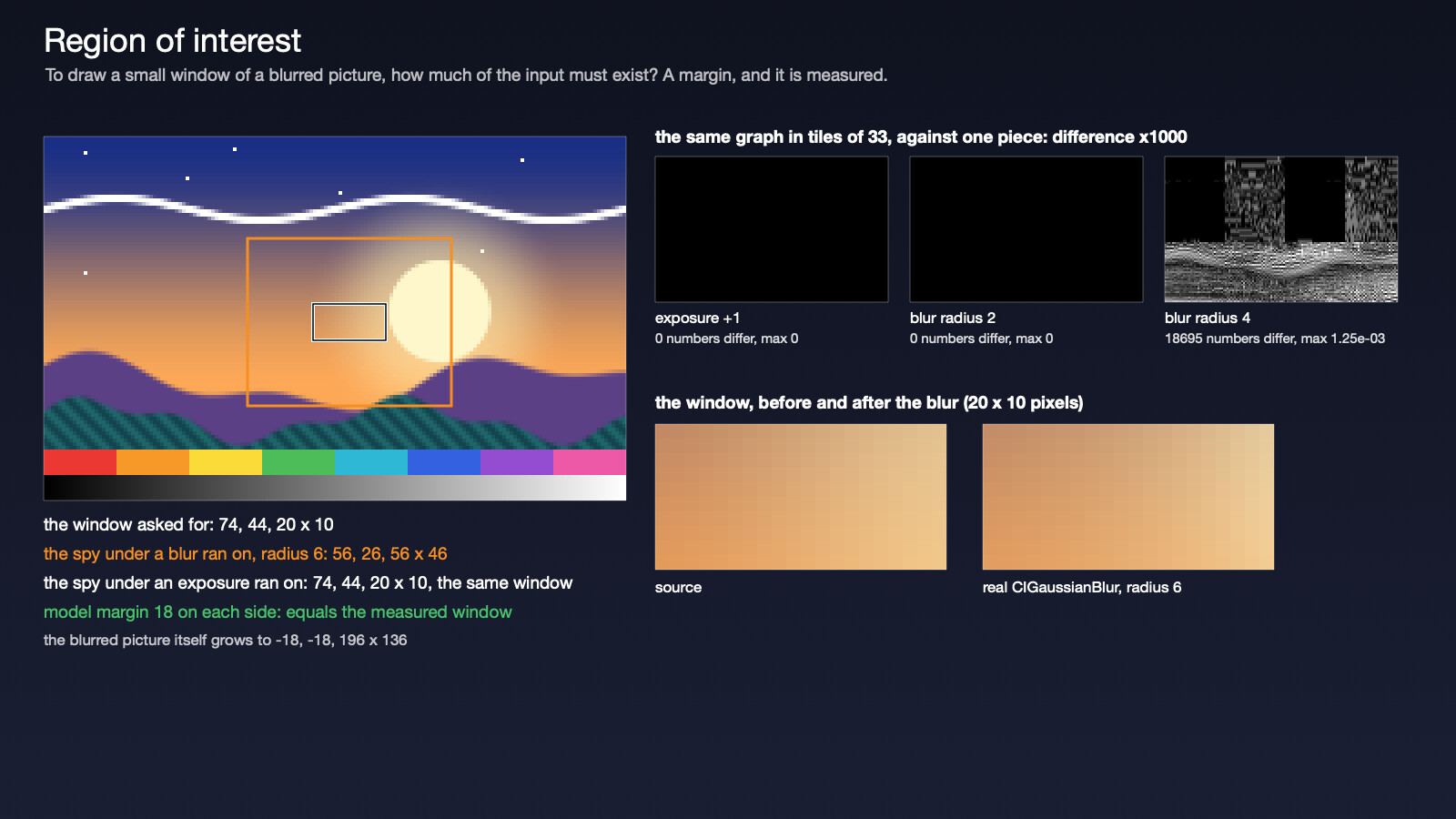
You will be able to explain the region of interest to a child, say what that rectangle is for a color operation and for a blur, and trace it by hand through a small graph.
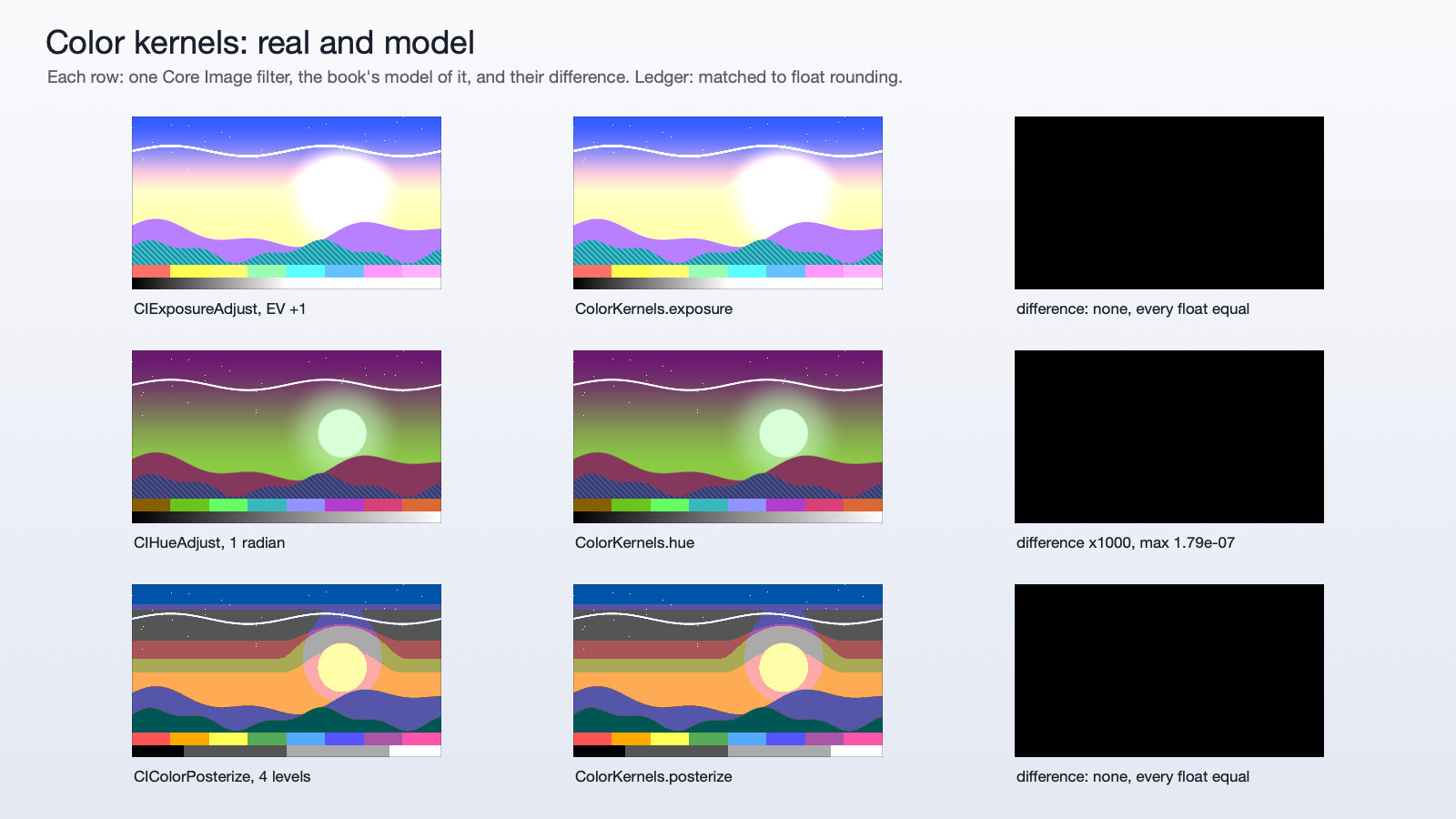
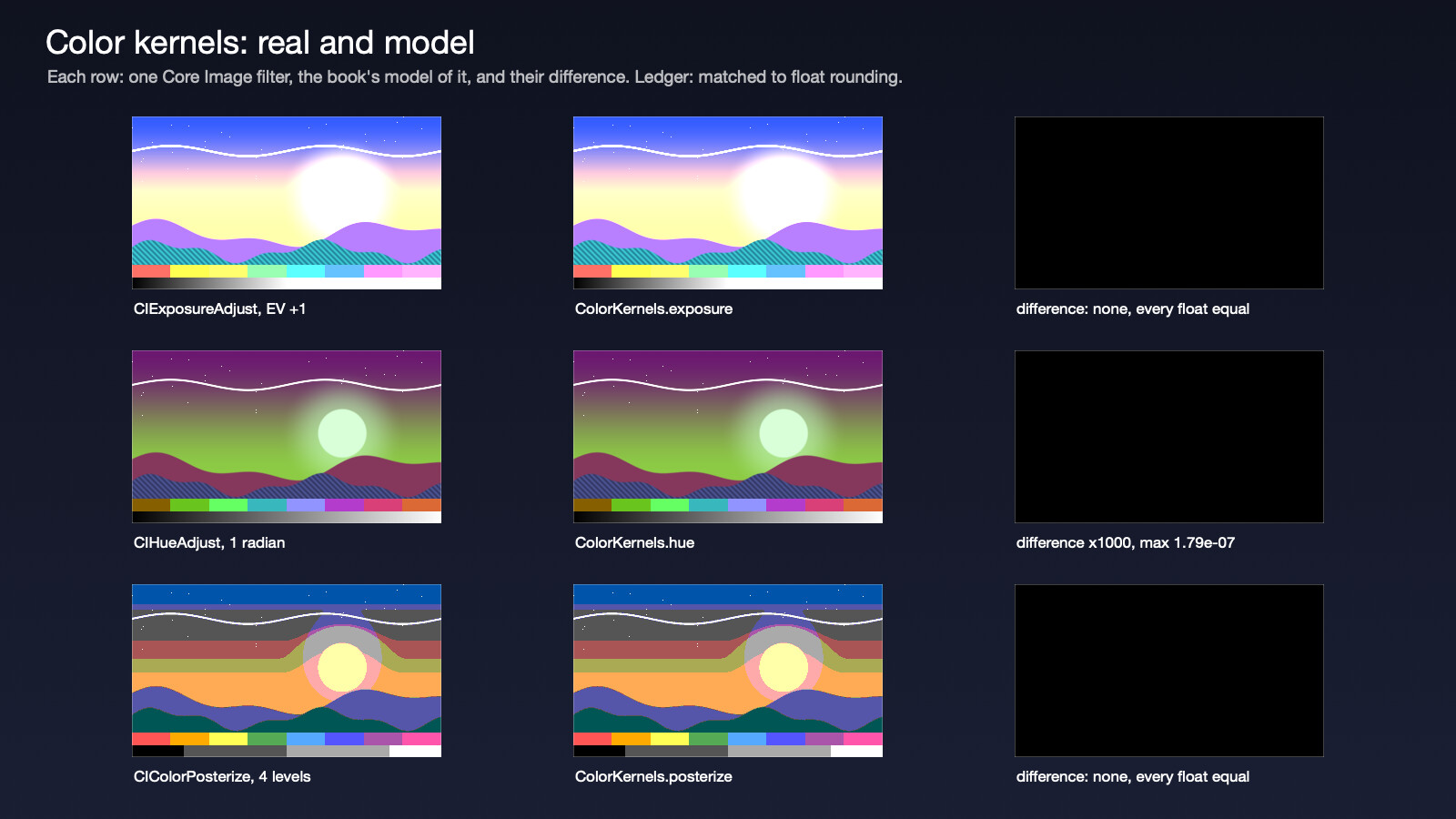
You will be able to explain a color kernel to a child: a small machine that takes one pixel in and gives one pixel out, with no memory of its neighbors.
You will be able to say what a transfer function is, in words a child could follow, and compute the sRGB pair by hand in both directions.
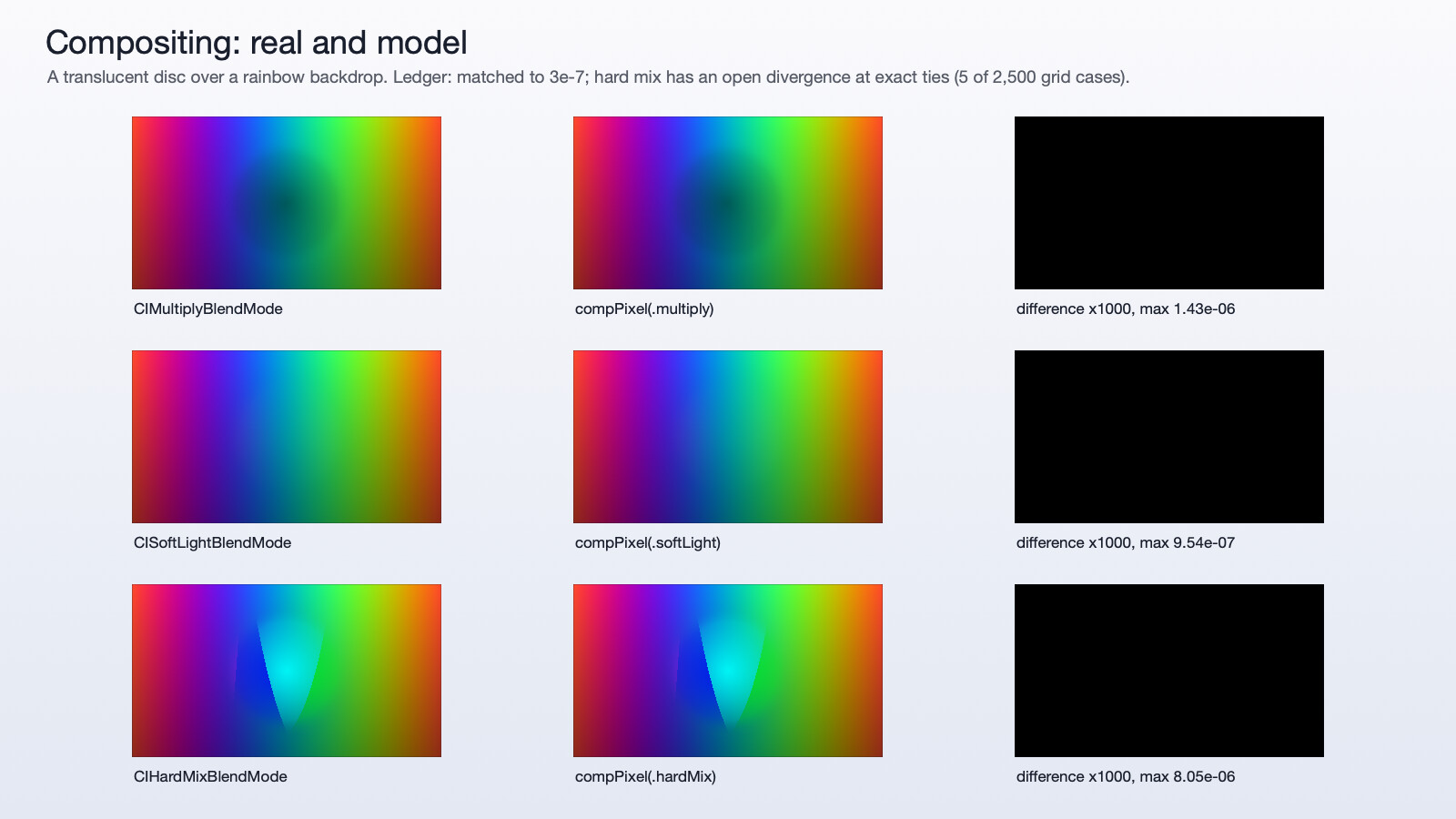
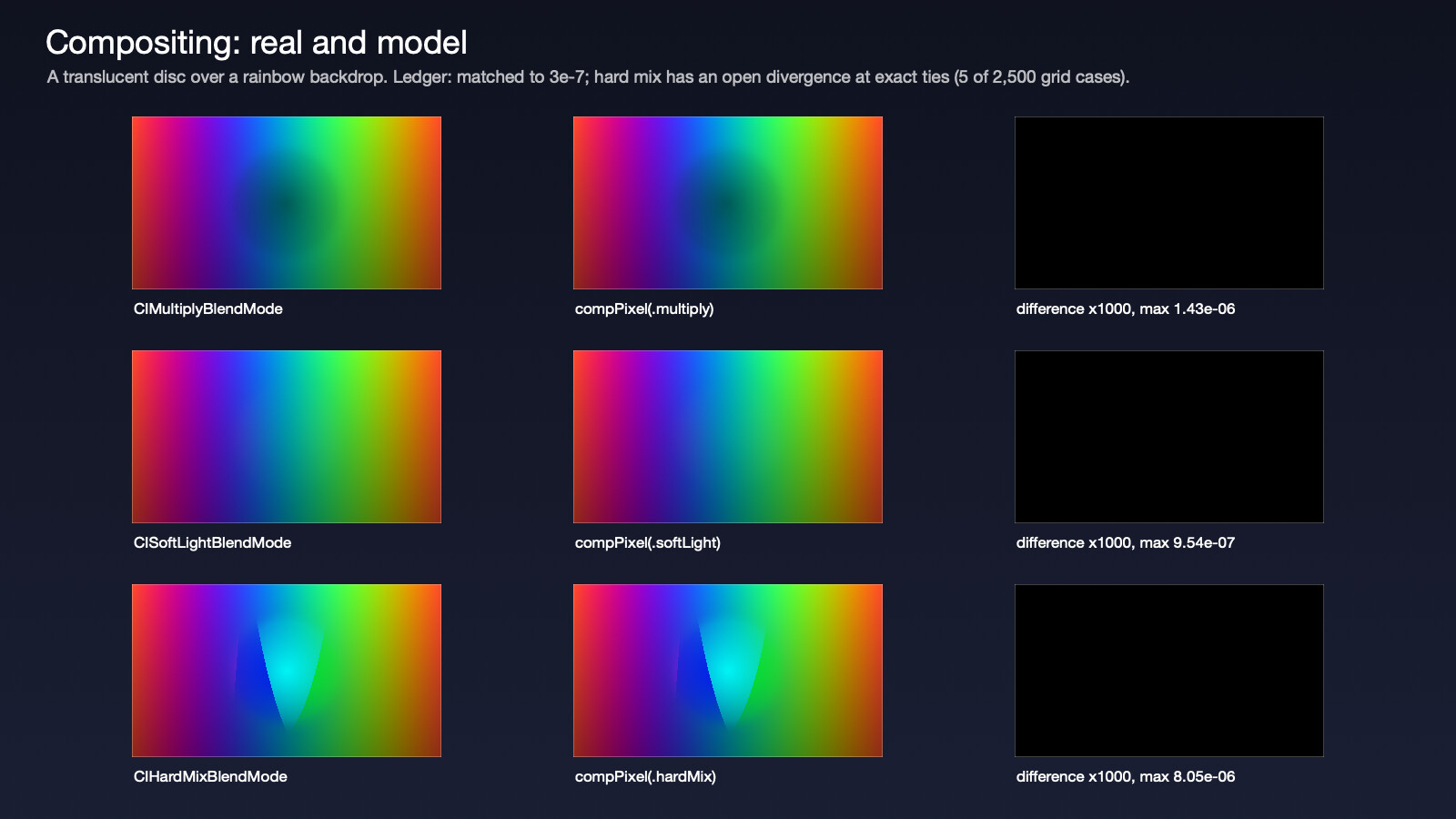
You will be able to say what compositing is: two images in, one image out, with a rule that works on four premultiplied numbers per pixel.
You will be able to explain a neighborhood filter to a child: every output pixel is a weighted sum of a small window of input pixels.
You will be able to explain resampling to a child: every pixel of the new picture asks where in the old picture it comes from, and the answer is a position that usually falls between pixels.
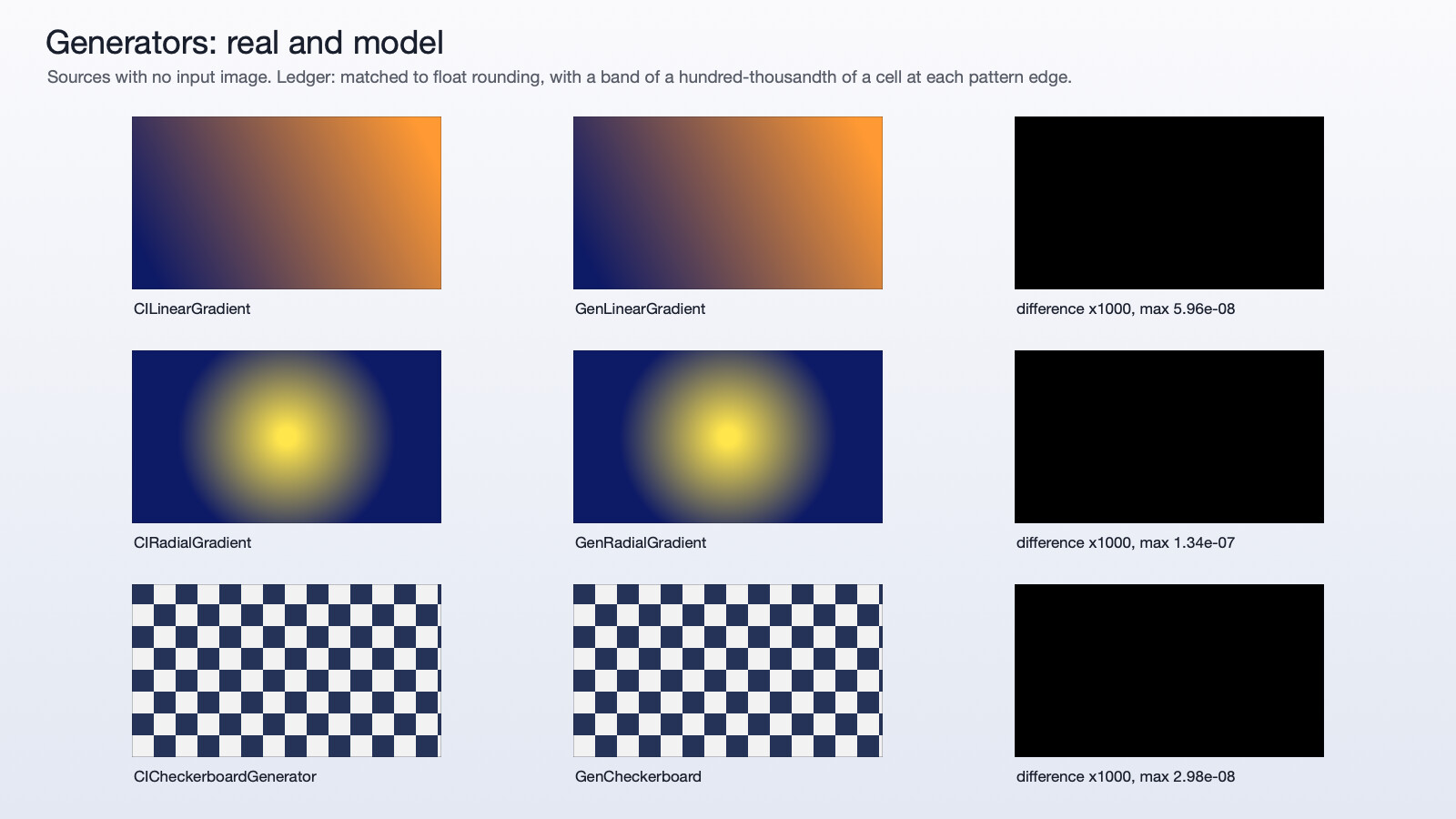
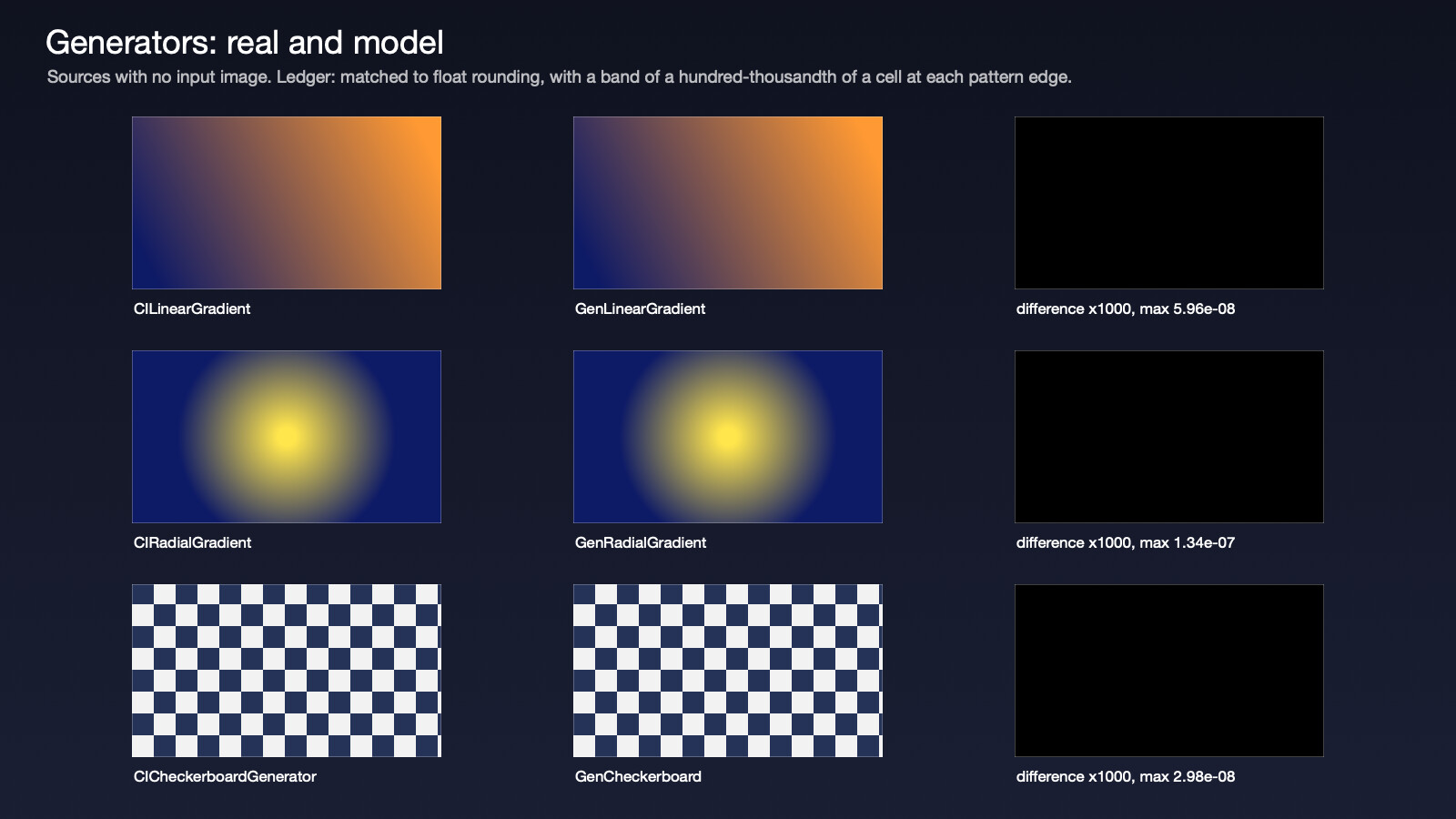
You will be able to explain a generator to a child: a machine with dials and no slot for a picture, which is really a rule that gives a color for every place.
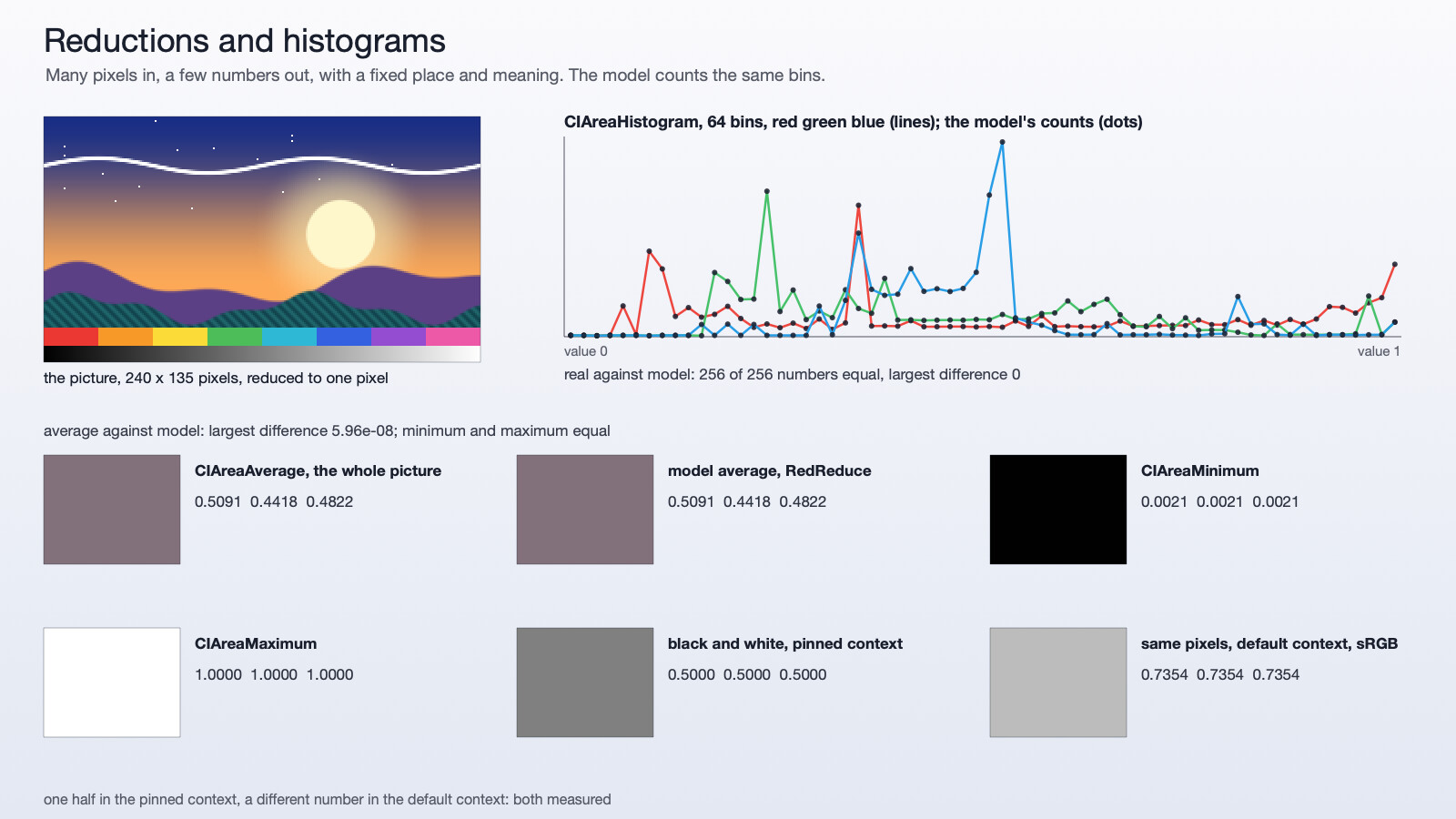
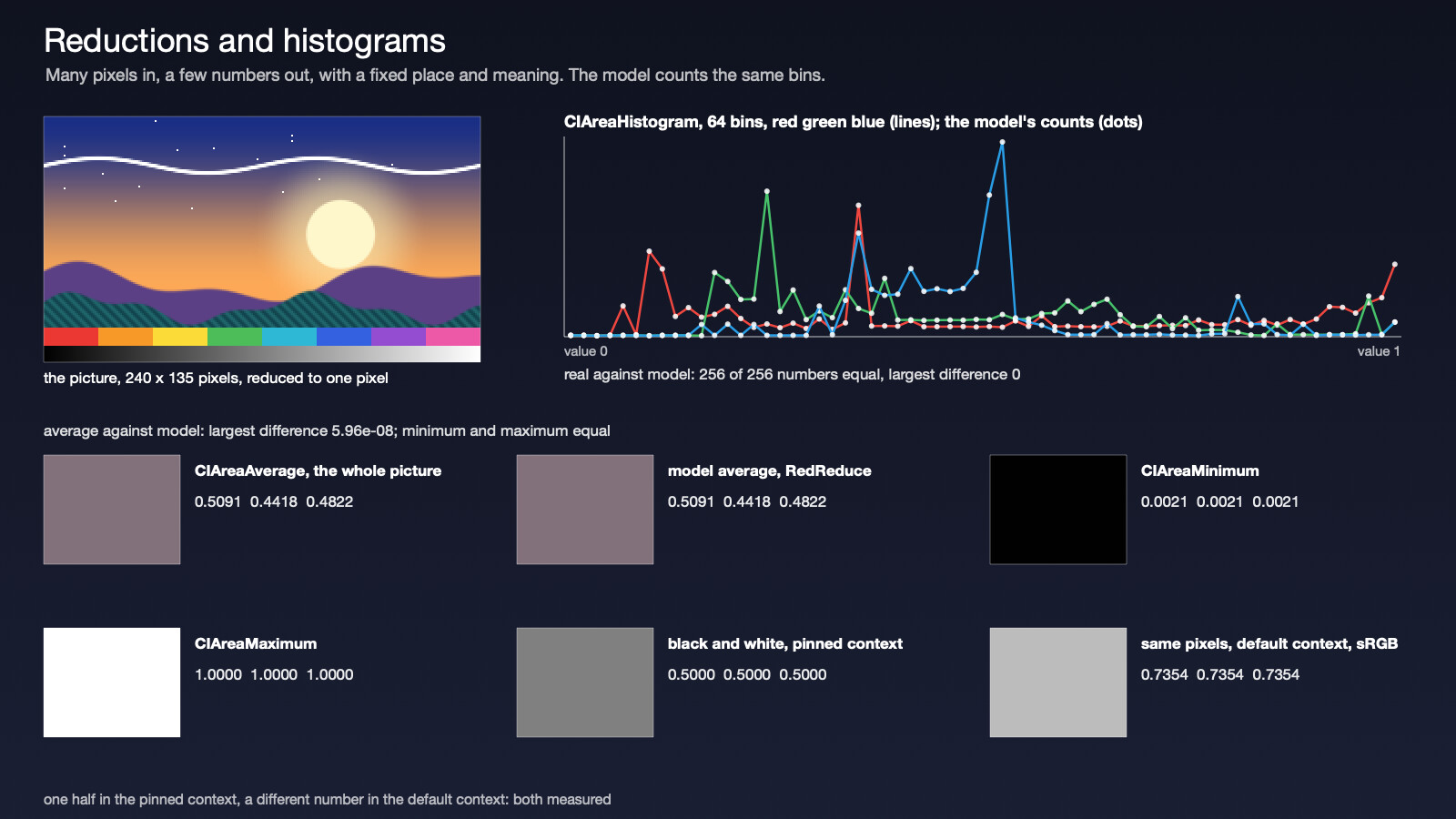
You will be able to explain a reduction to a child: many pixels go in, a few come out, and the few have a fixed place and a fixed meaning.
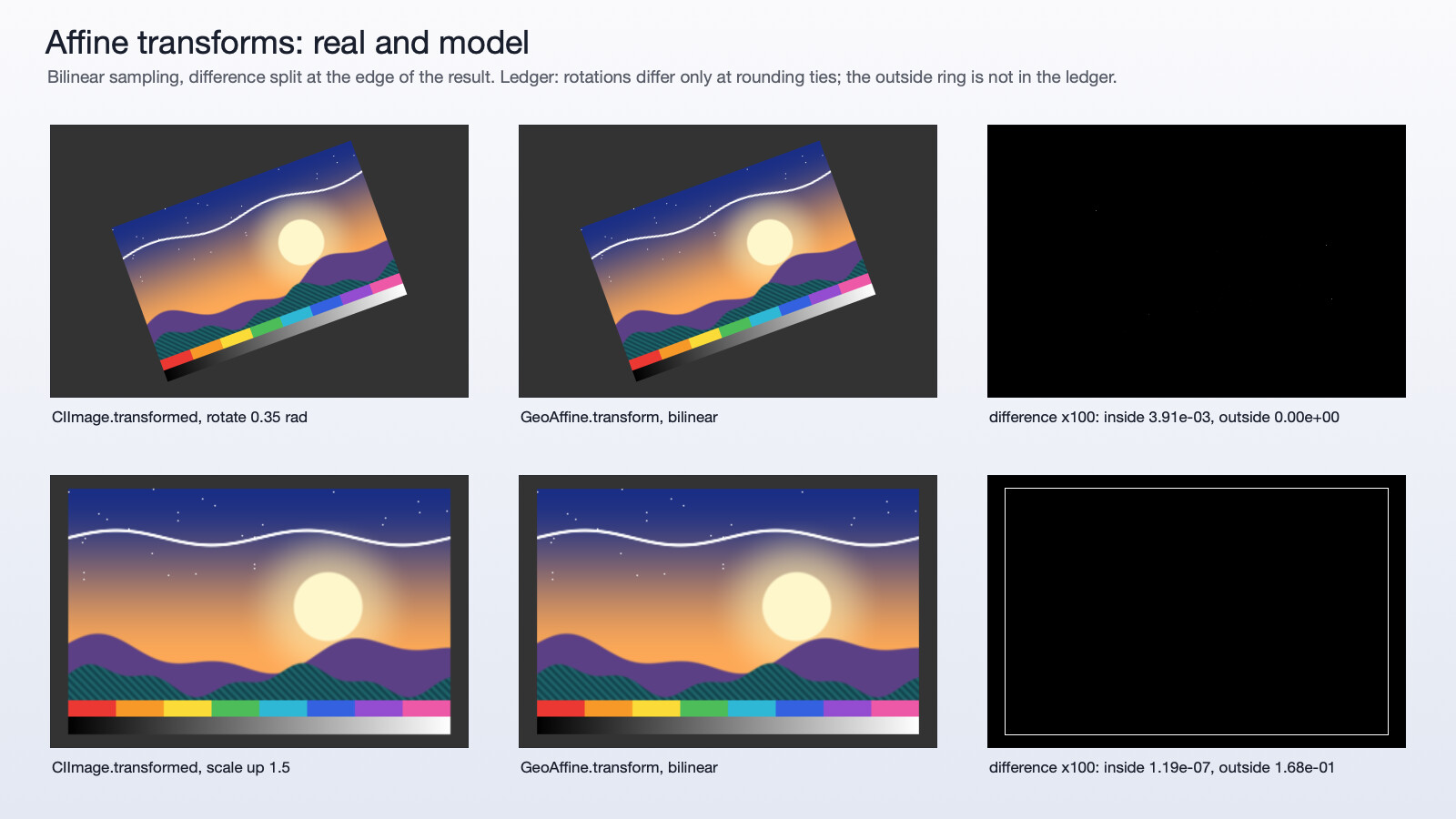
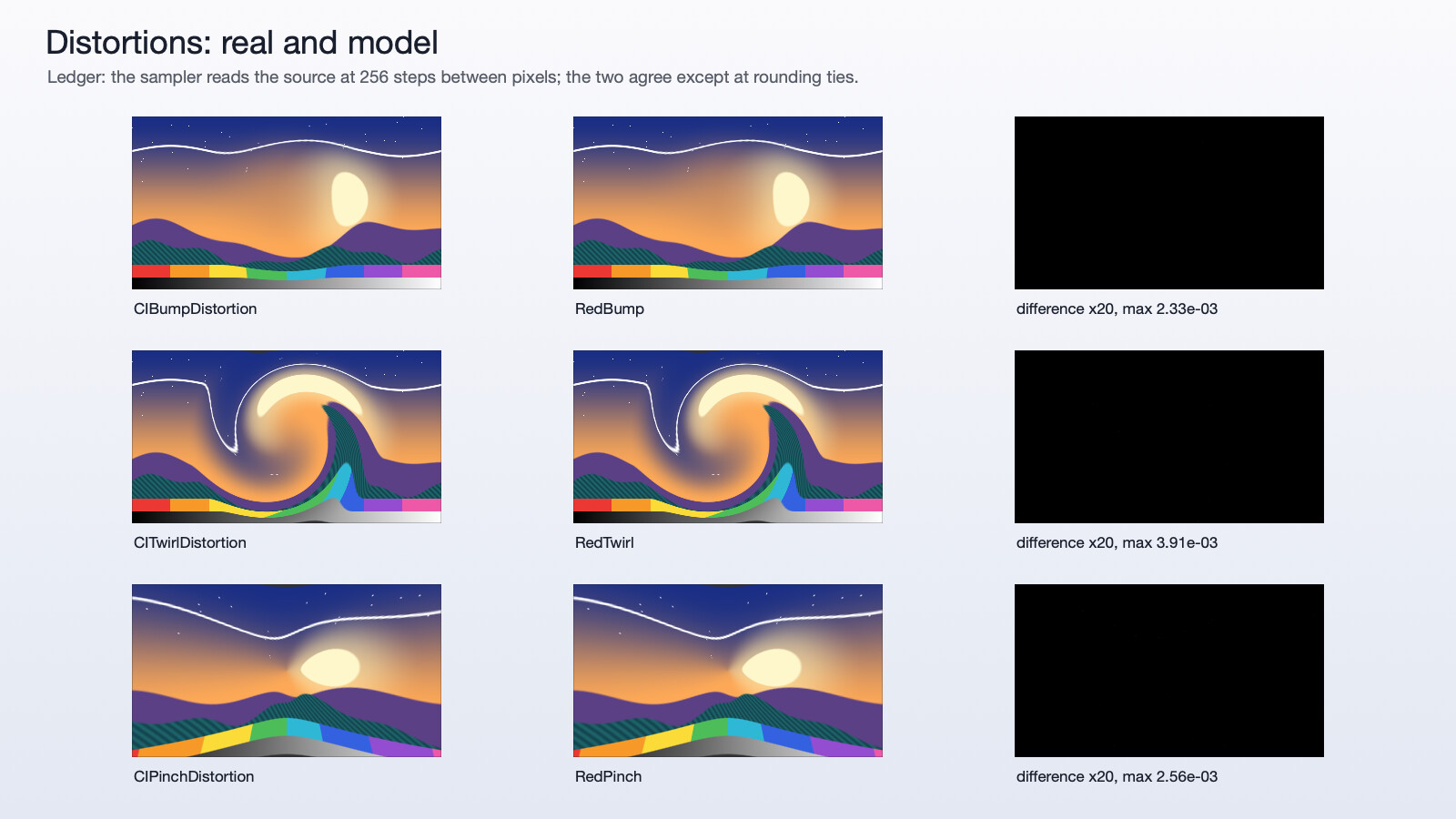
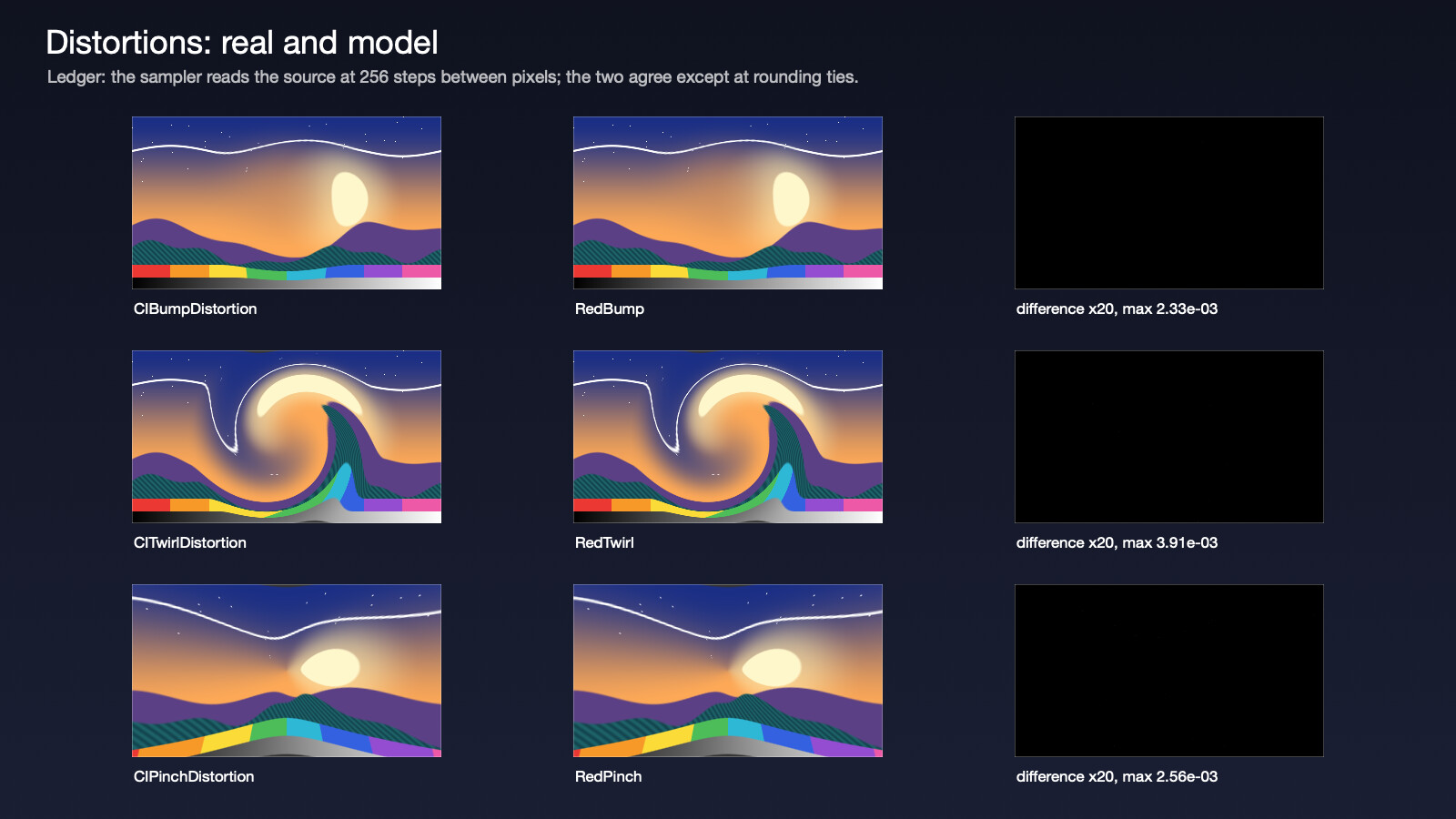
You will be able to explain a warp to a child: for each pixel of the output, a rule says which point of the input to read, and a reader mixes the four nearest input pixels.
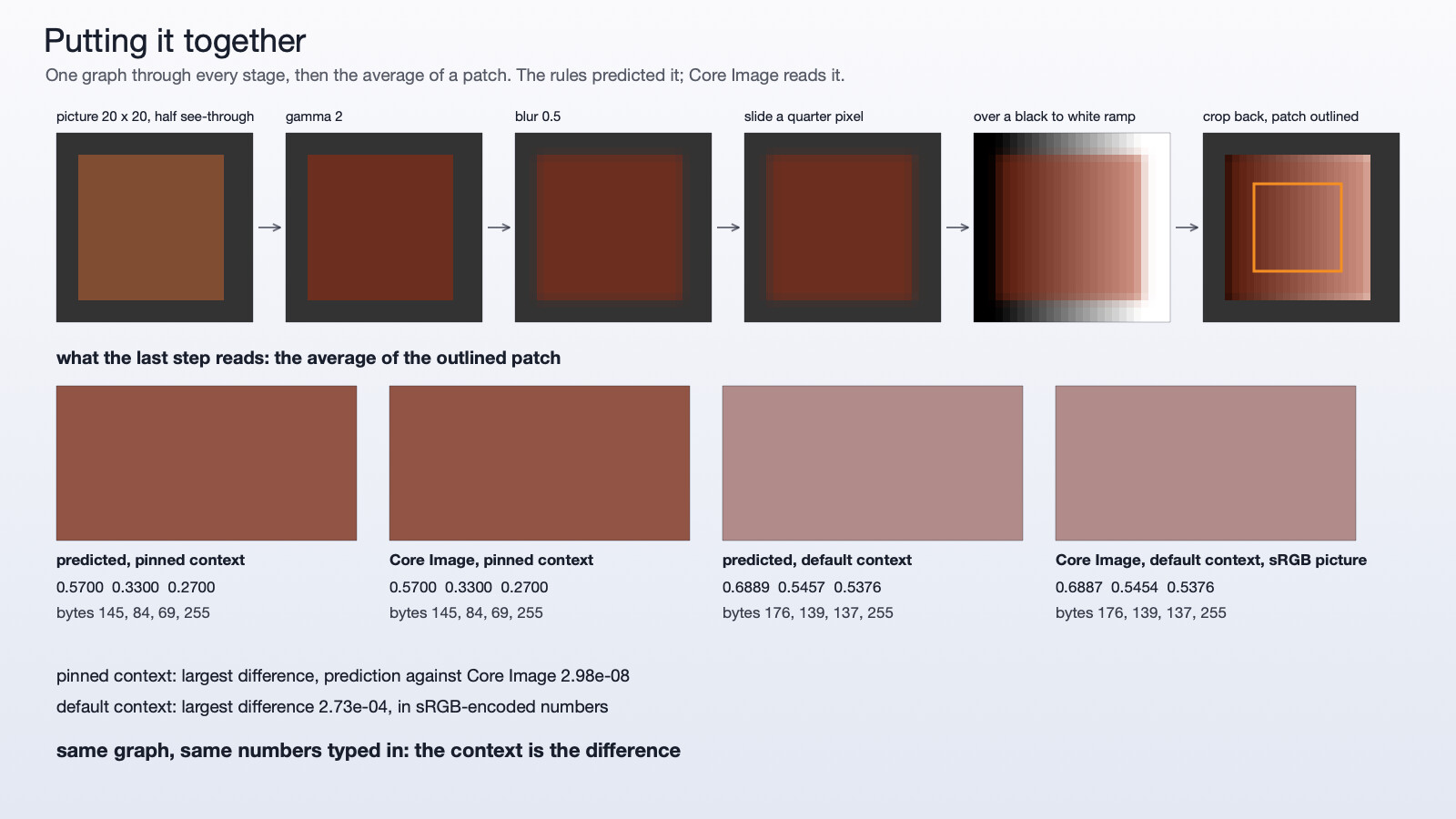
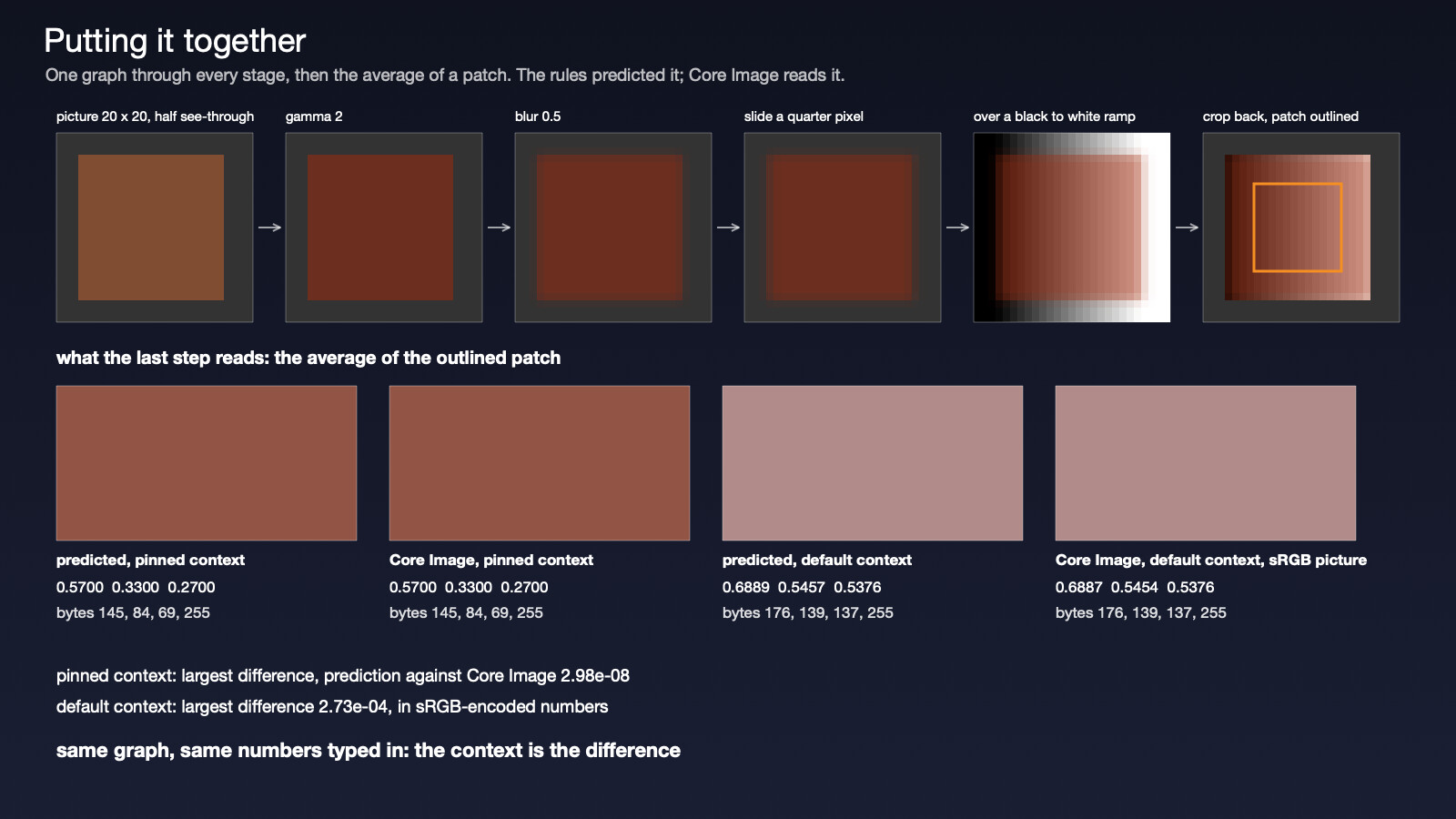
One graph through every stage, a playbook of symptoms, and the honest edge of what this book measured.