Core Text, Chapter 1. The Oracle Method for Text
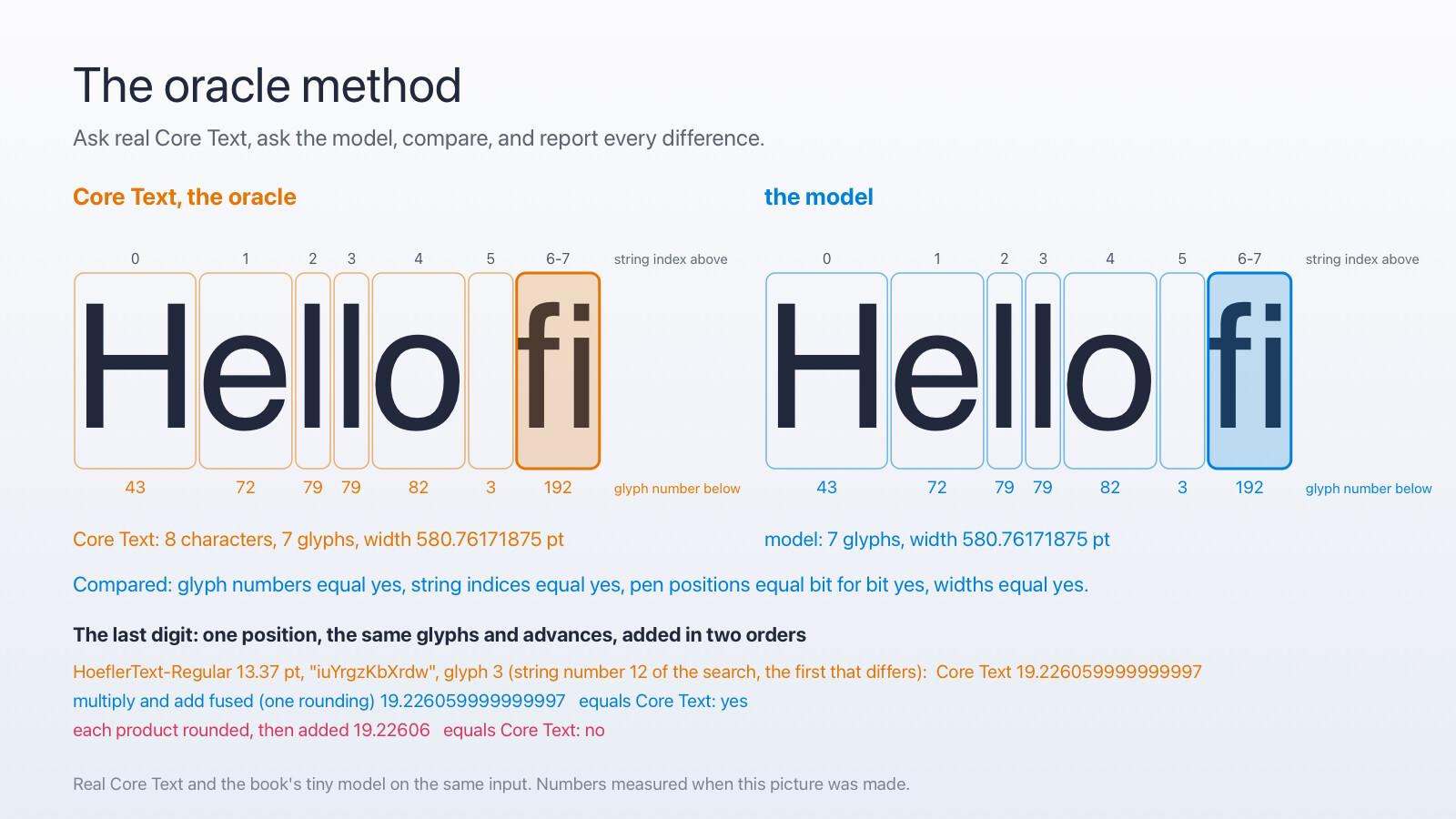
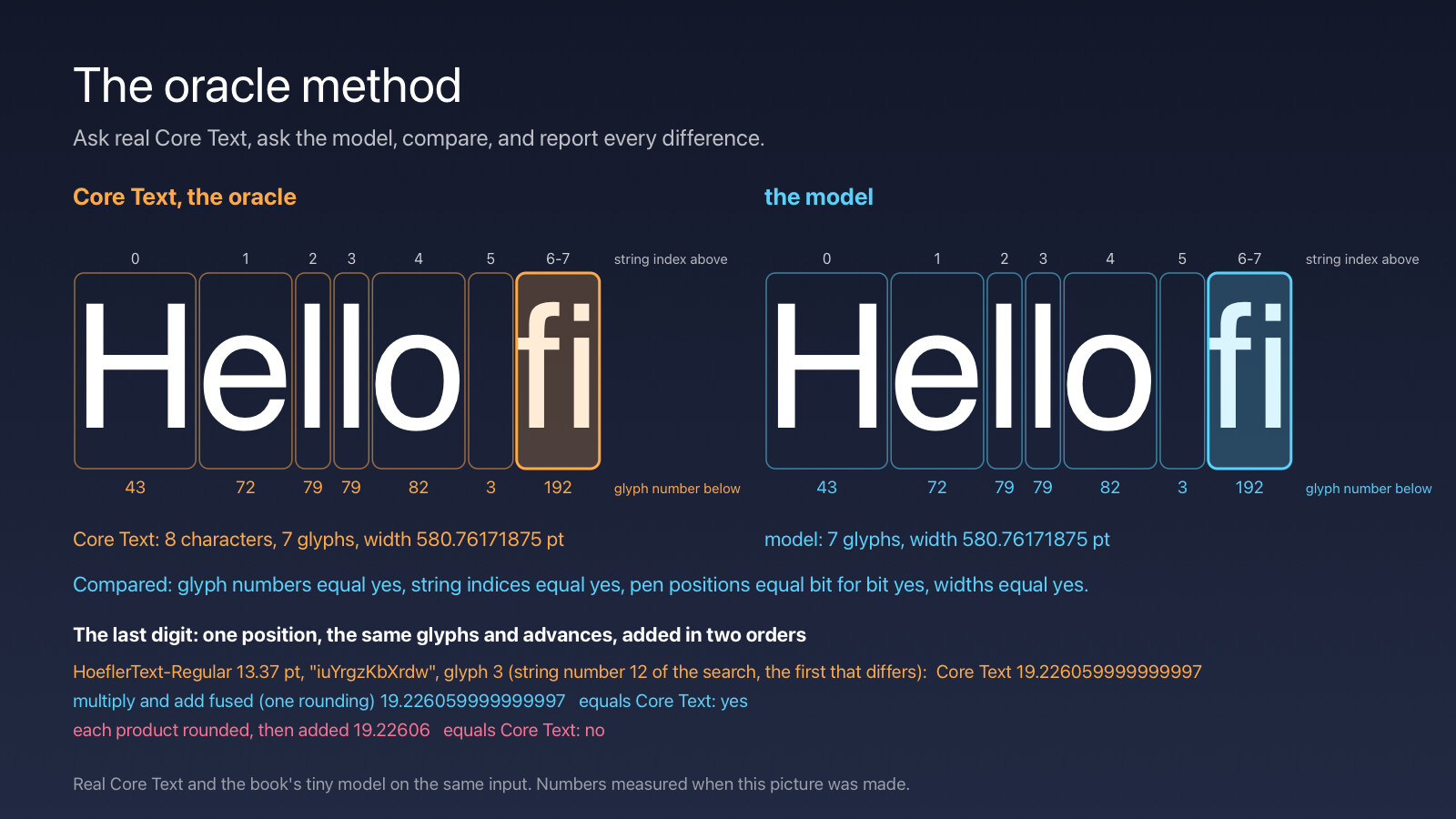
A line of text as an answer key, and the last digit that two ways of adding disagreed about.
How a string becomes lines.
Measured in this book · Bundles and licenses
Previous book: Core Graphics · All the books · Next book: Core Image
A line of text as an answer key, and the last digit that two ways of adding disagreed about.
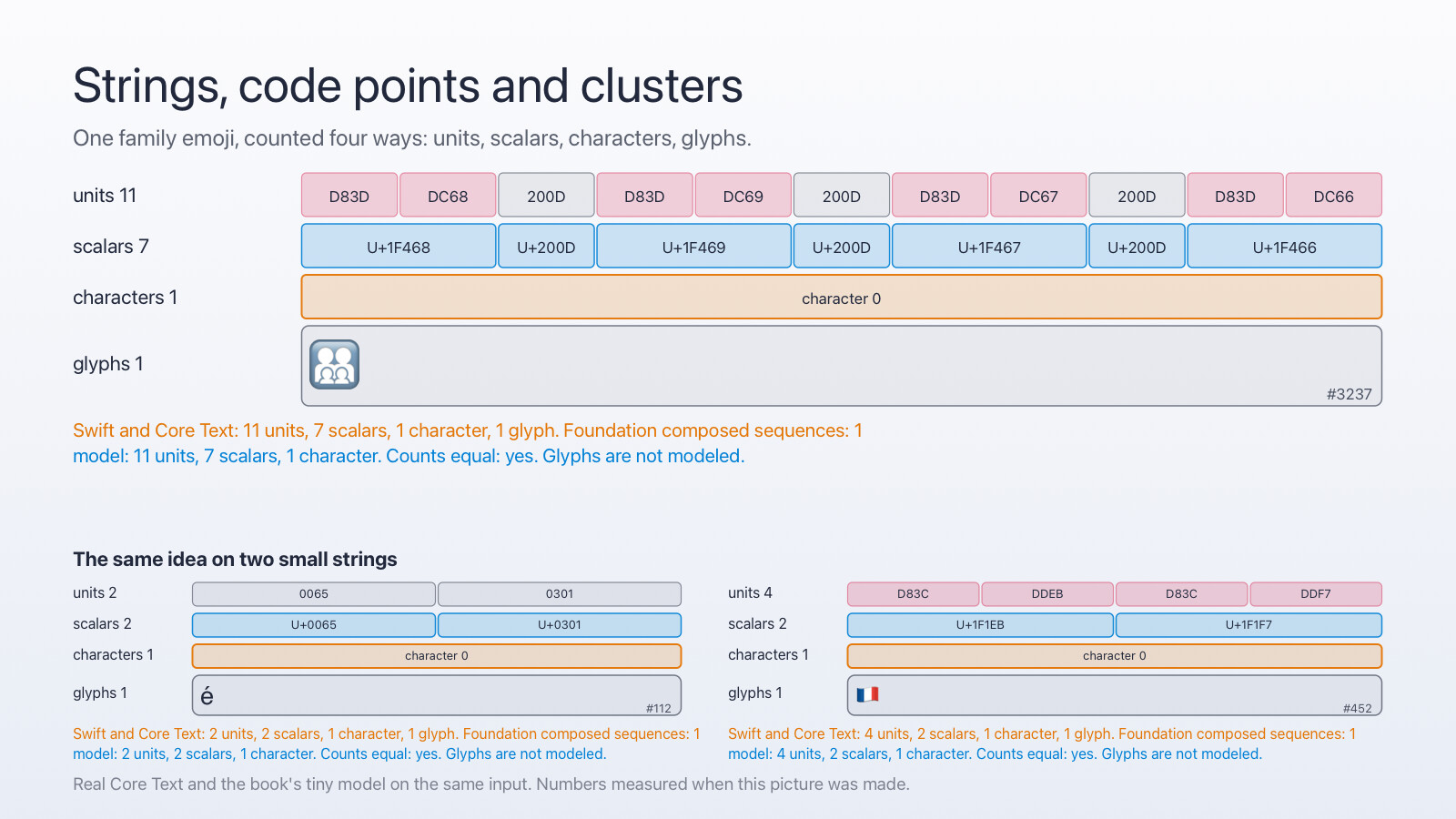
How long is a string, and what is it that a caret sees?
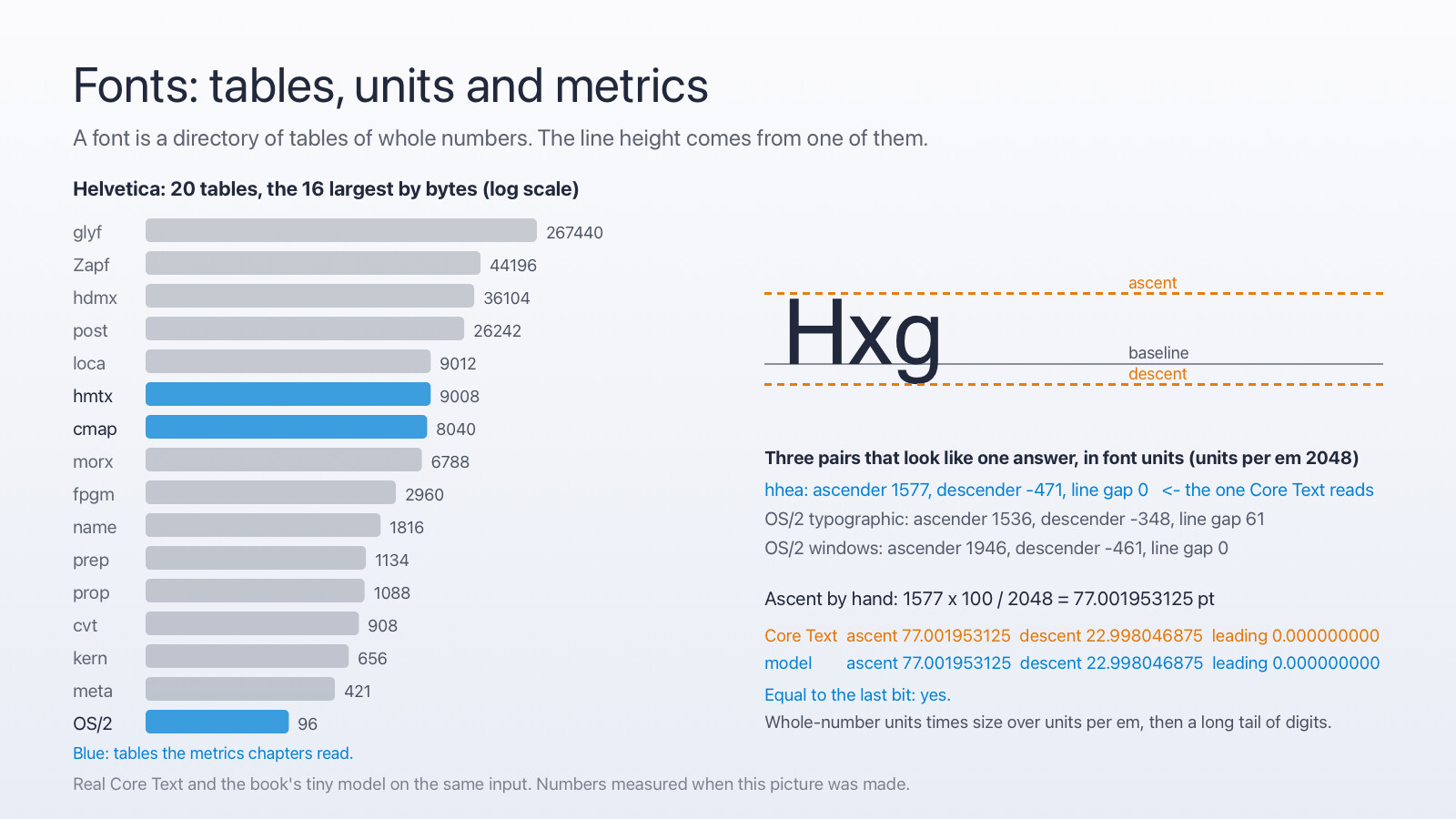
You will be able to say what a font file is: a short directory followed by tables, each found by a four letter tag, an offset and a length.
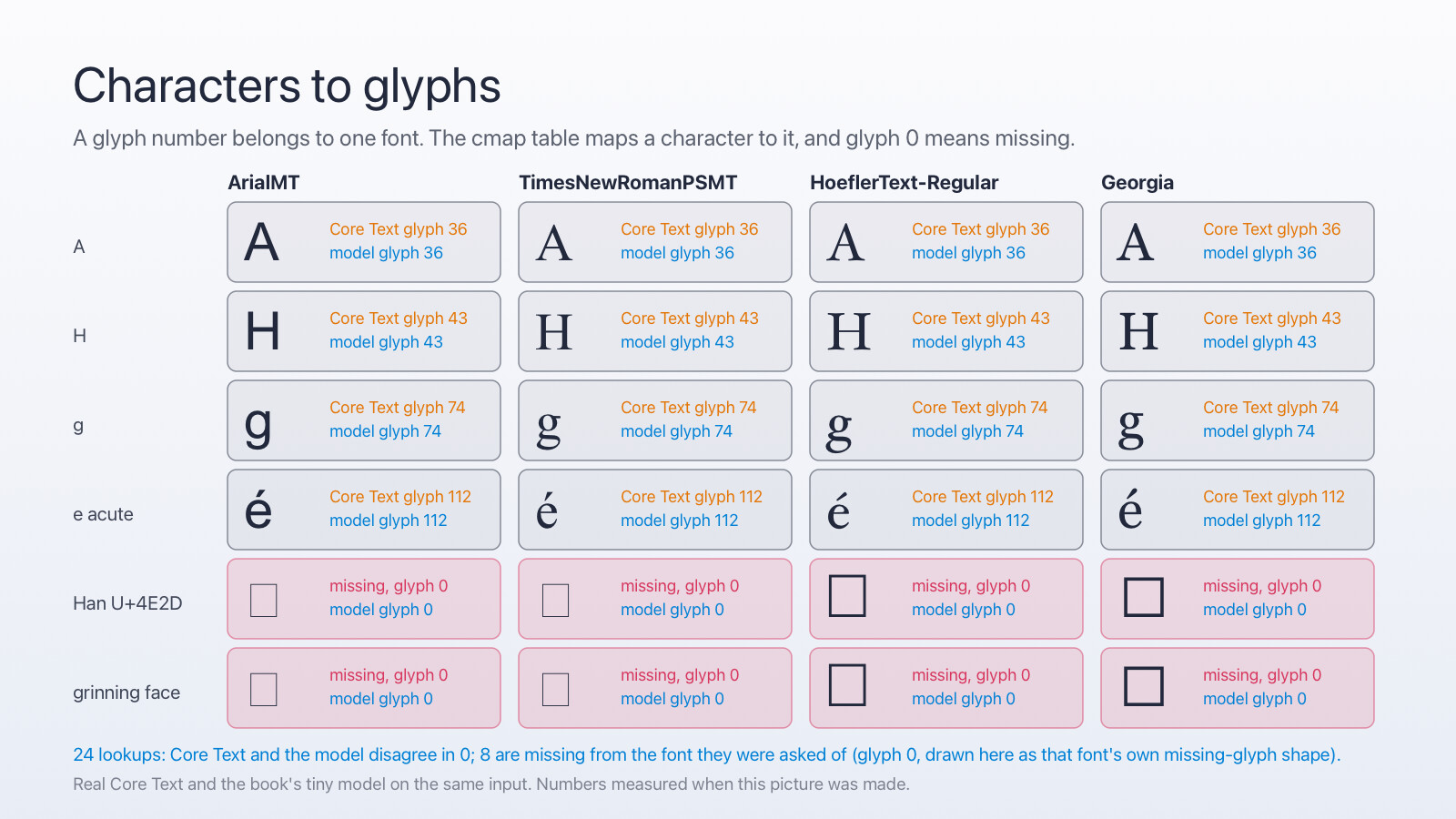
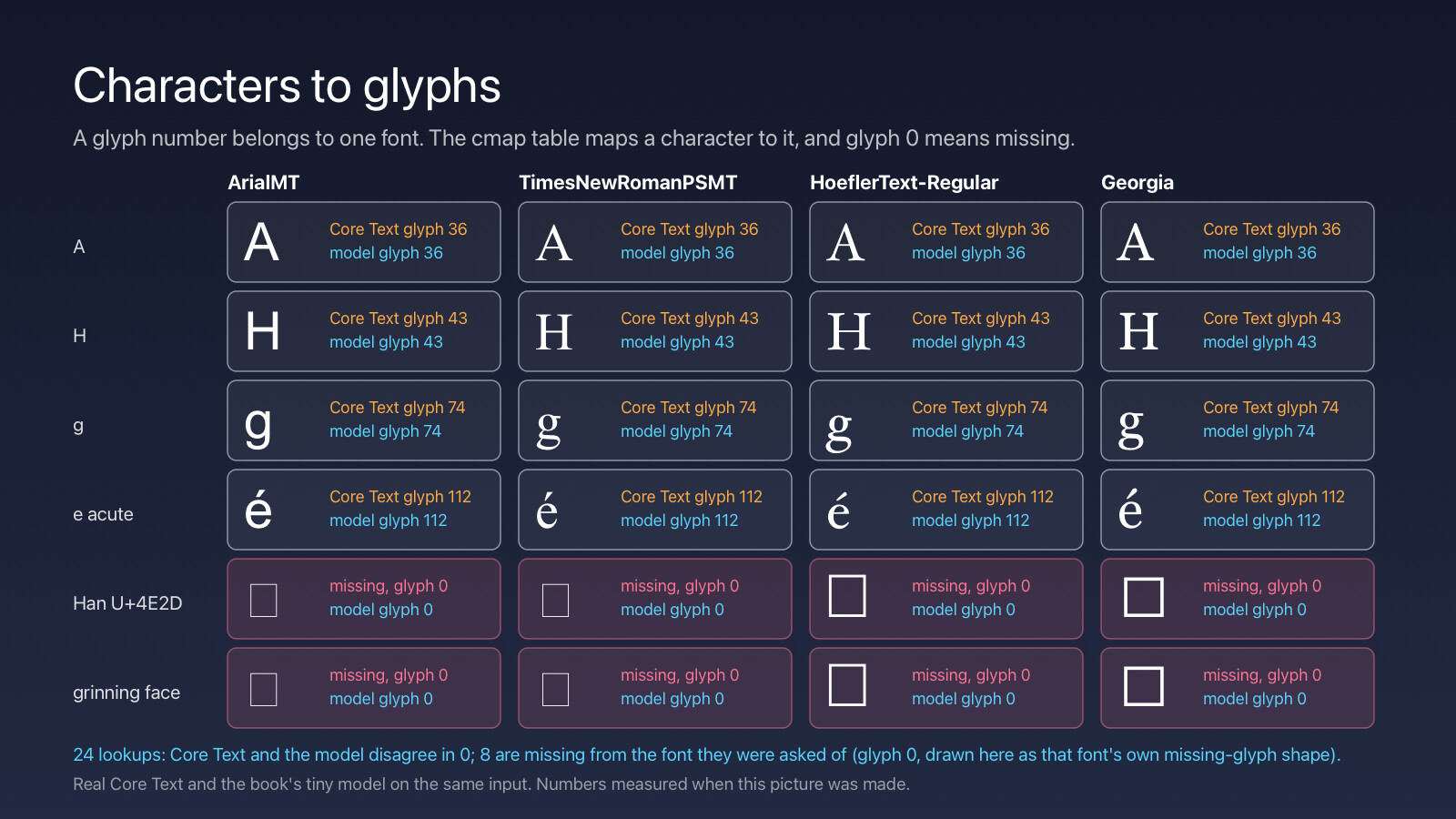
A glyph is a number that only one font understands, and the map from characters to those numbers has a few surprises.
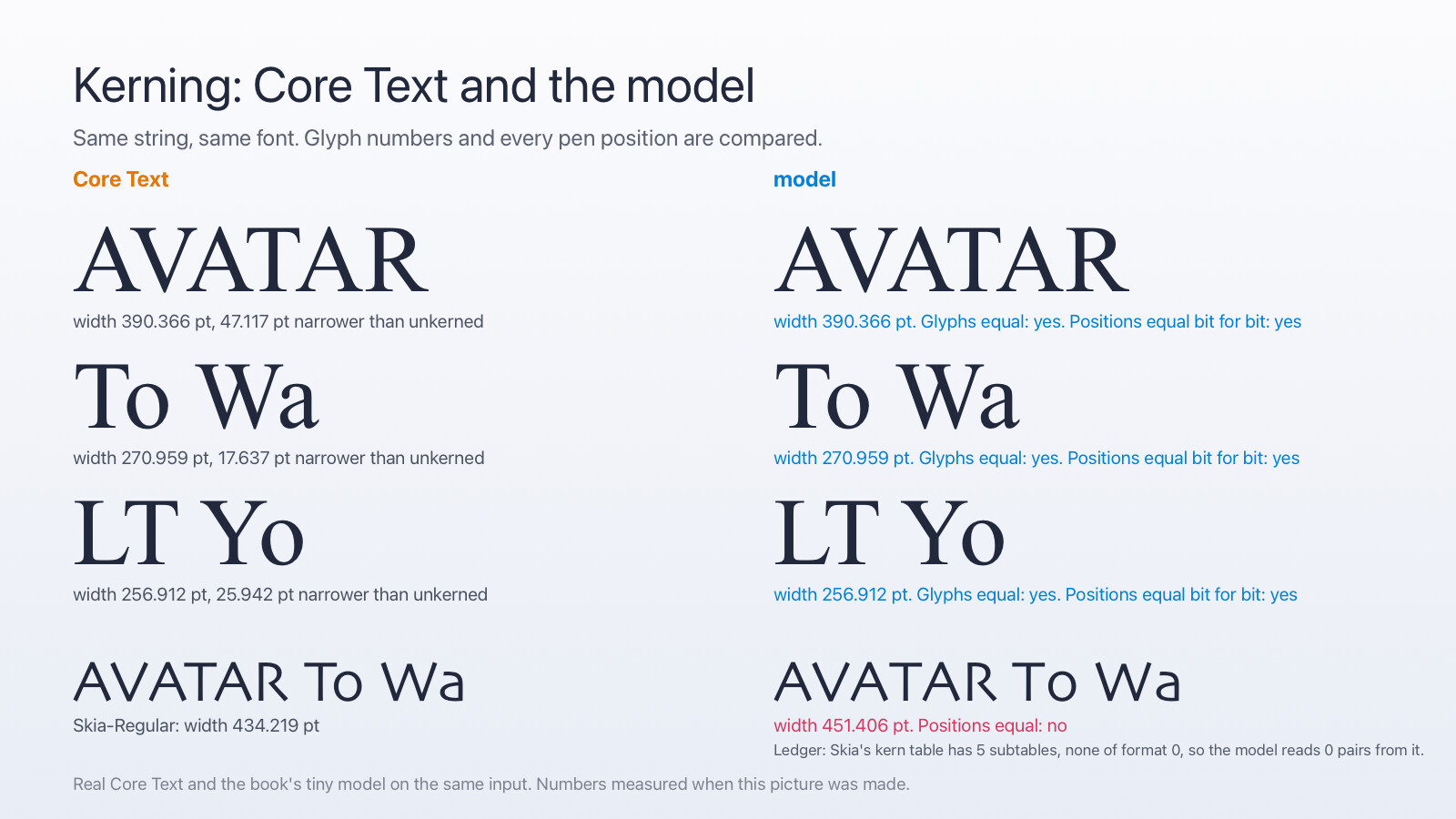
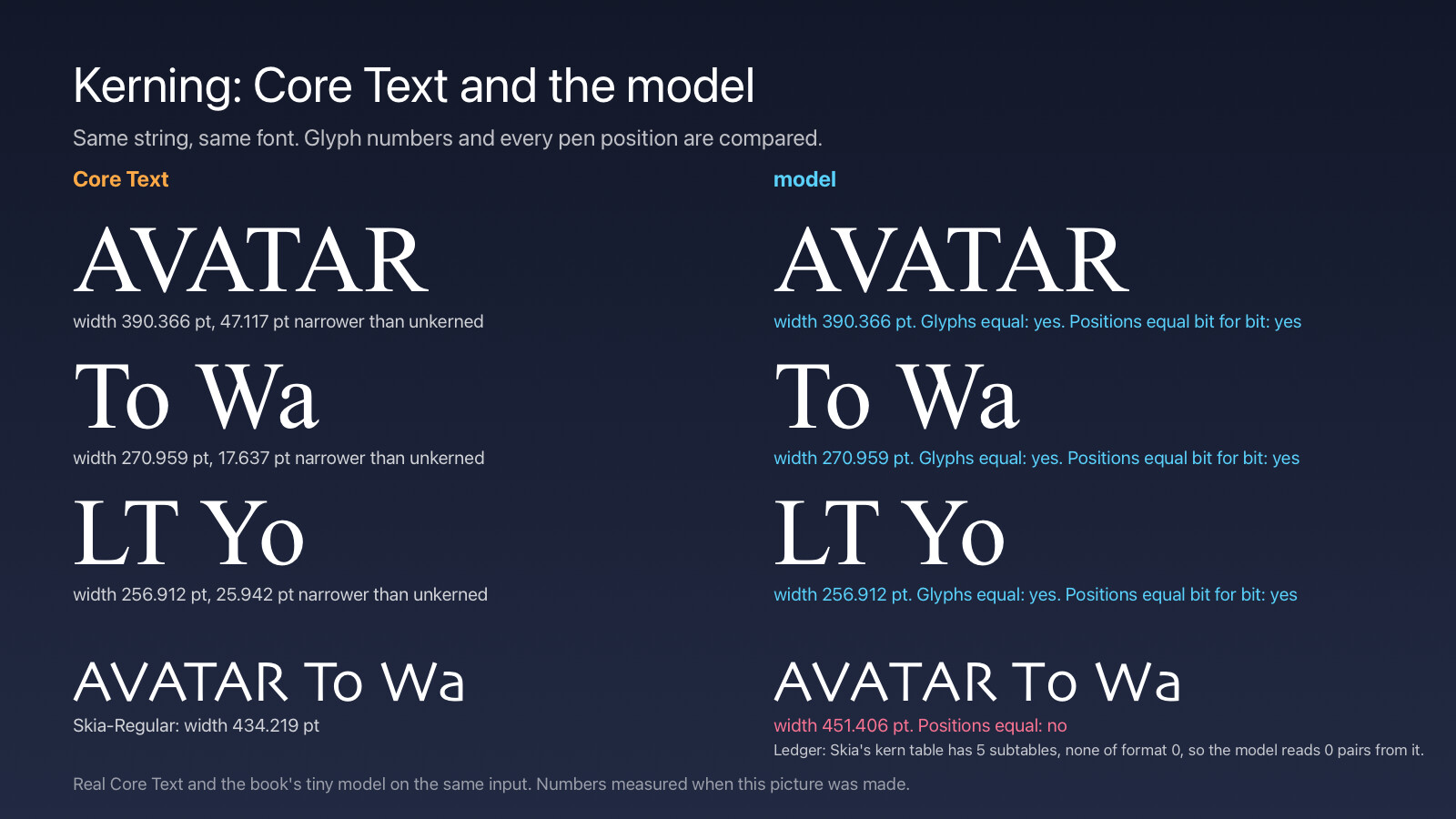
How wide a glyph is, how a pair of glyphs pulls together, and how space is added on top.
You will be able to say what shaping is: a list of glyph numbers goes in, a rule book written inside the font is applied, and a list of glyph numbers comes out.
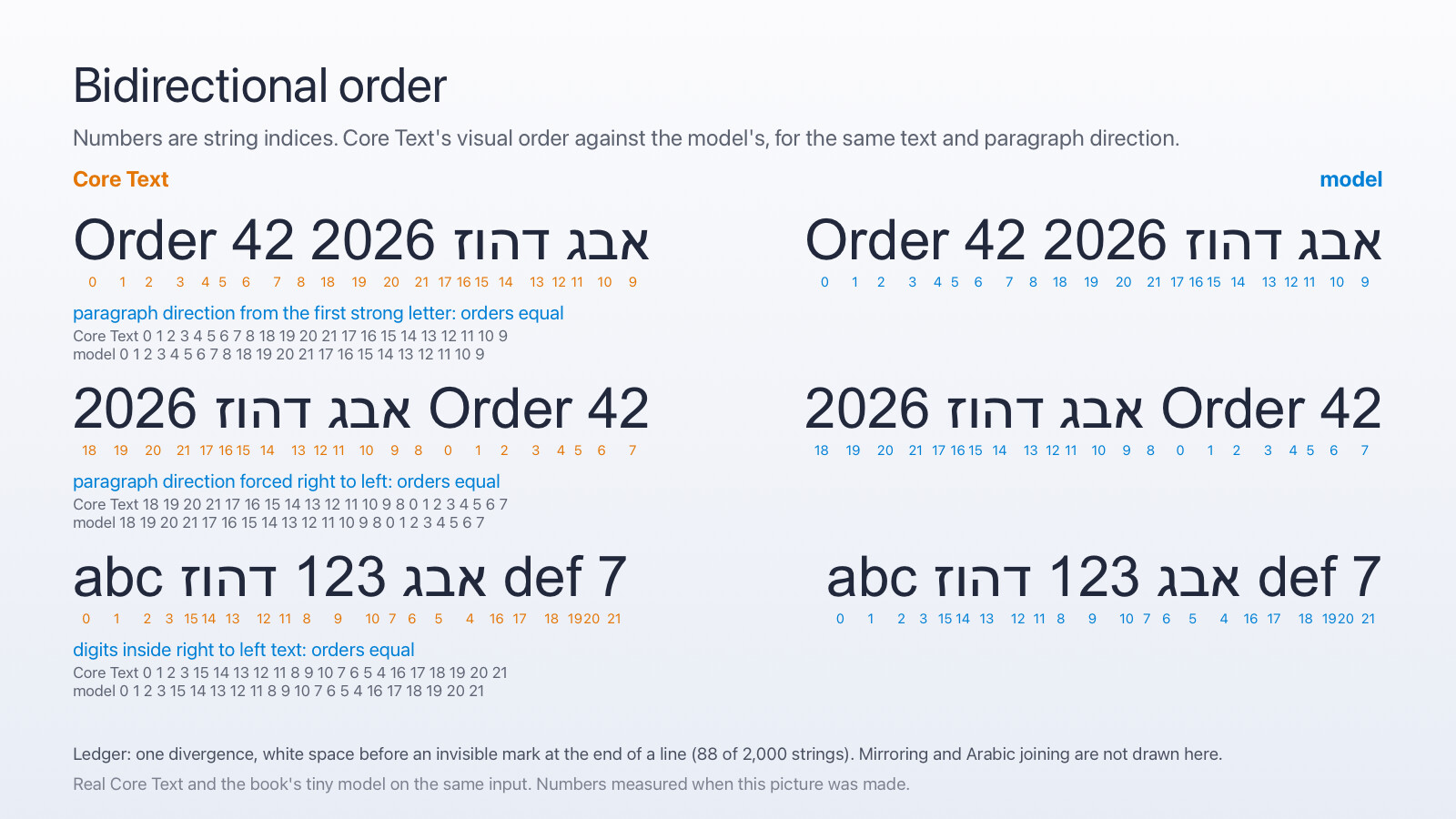
Where each character stands when one line holds text that reads in both directions, and how to prove it.
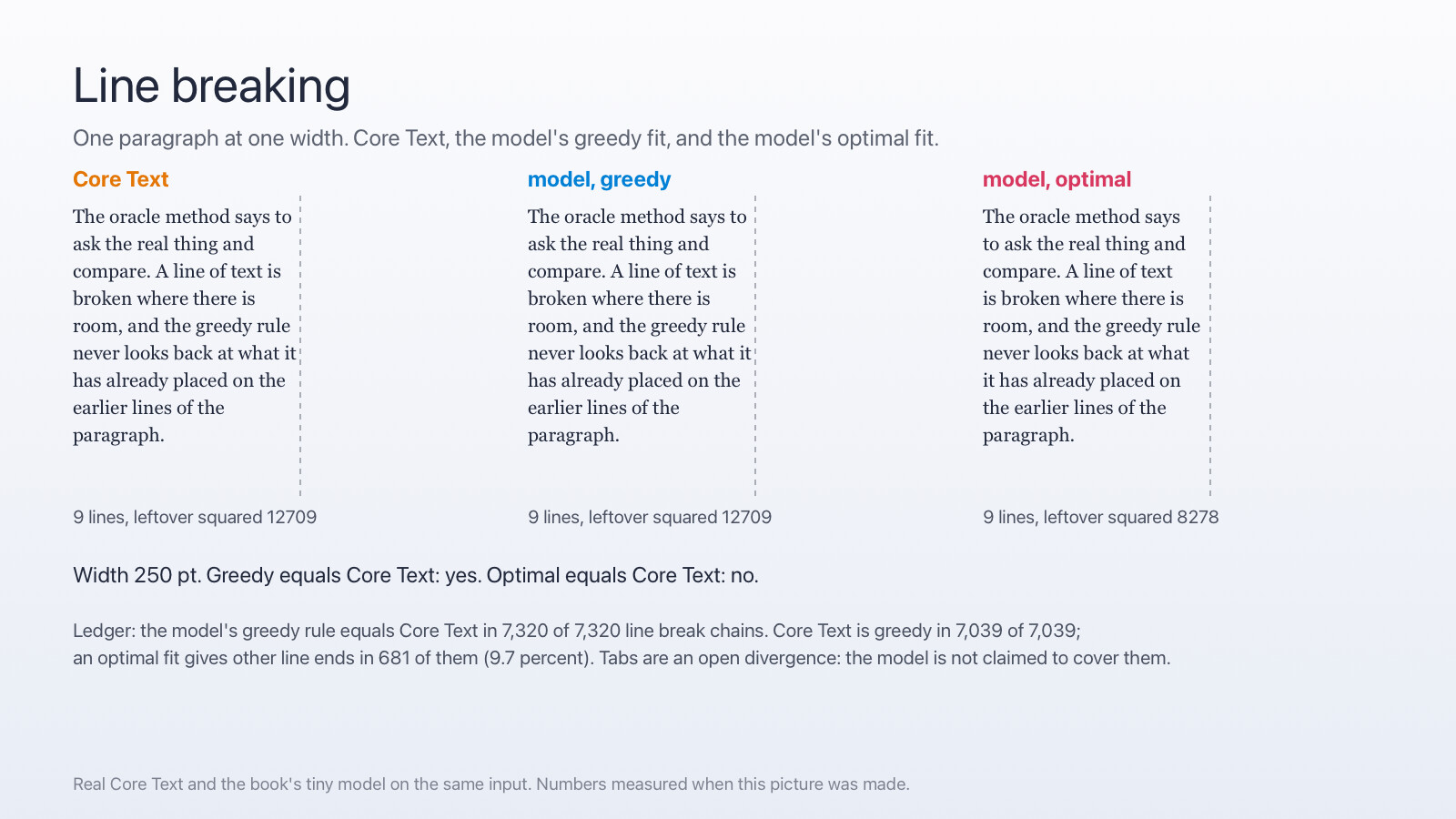
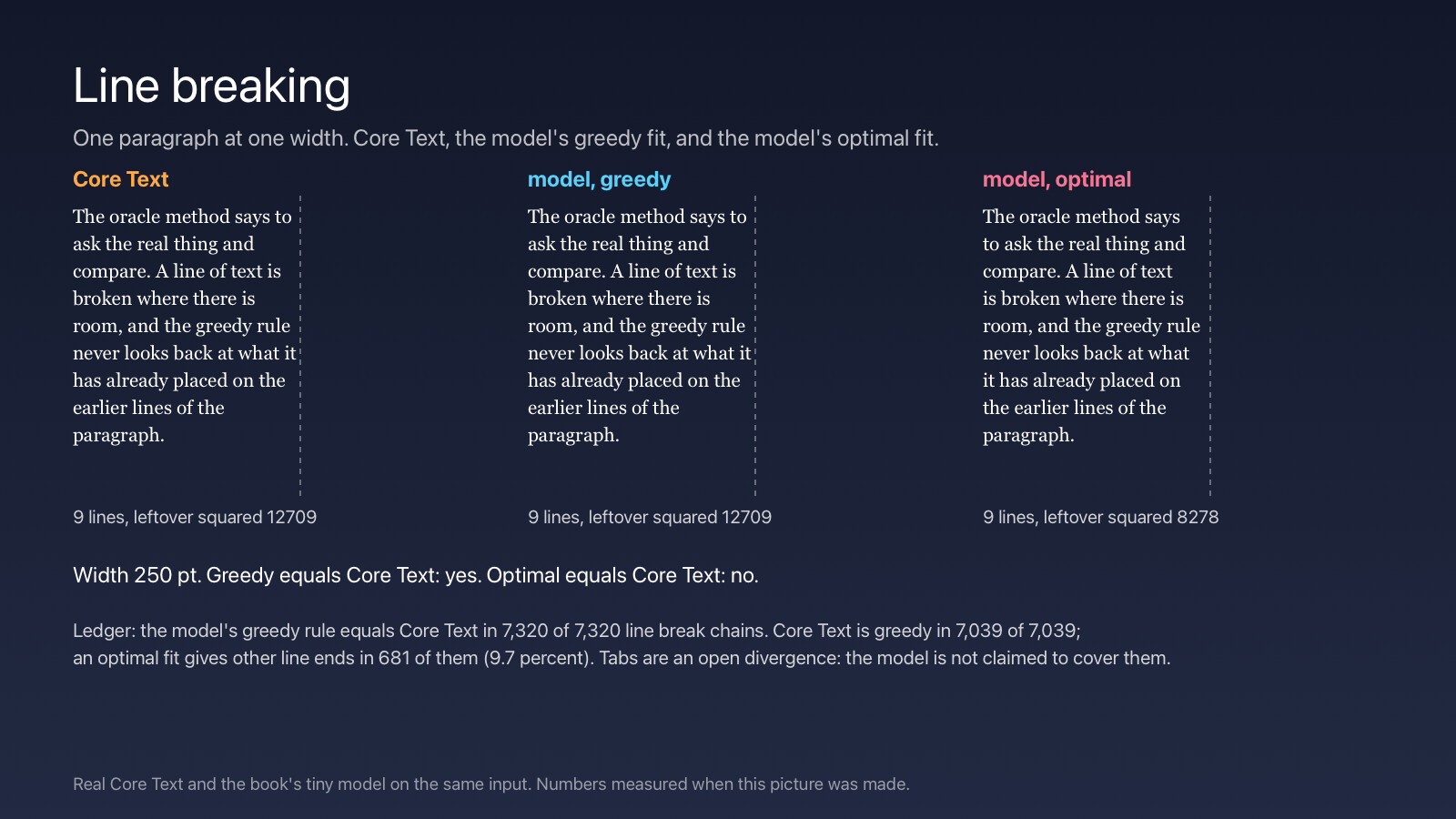
Where a line of text may end, where it does end, and whether that is the best place to end it.
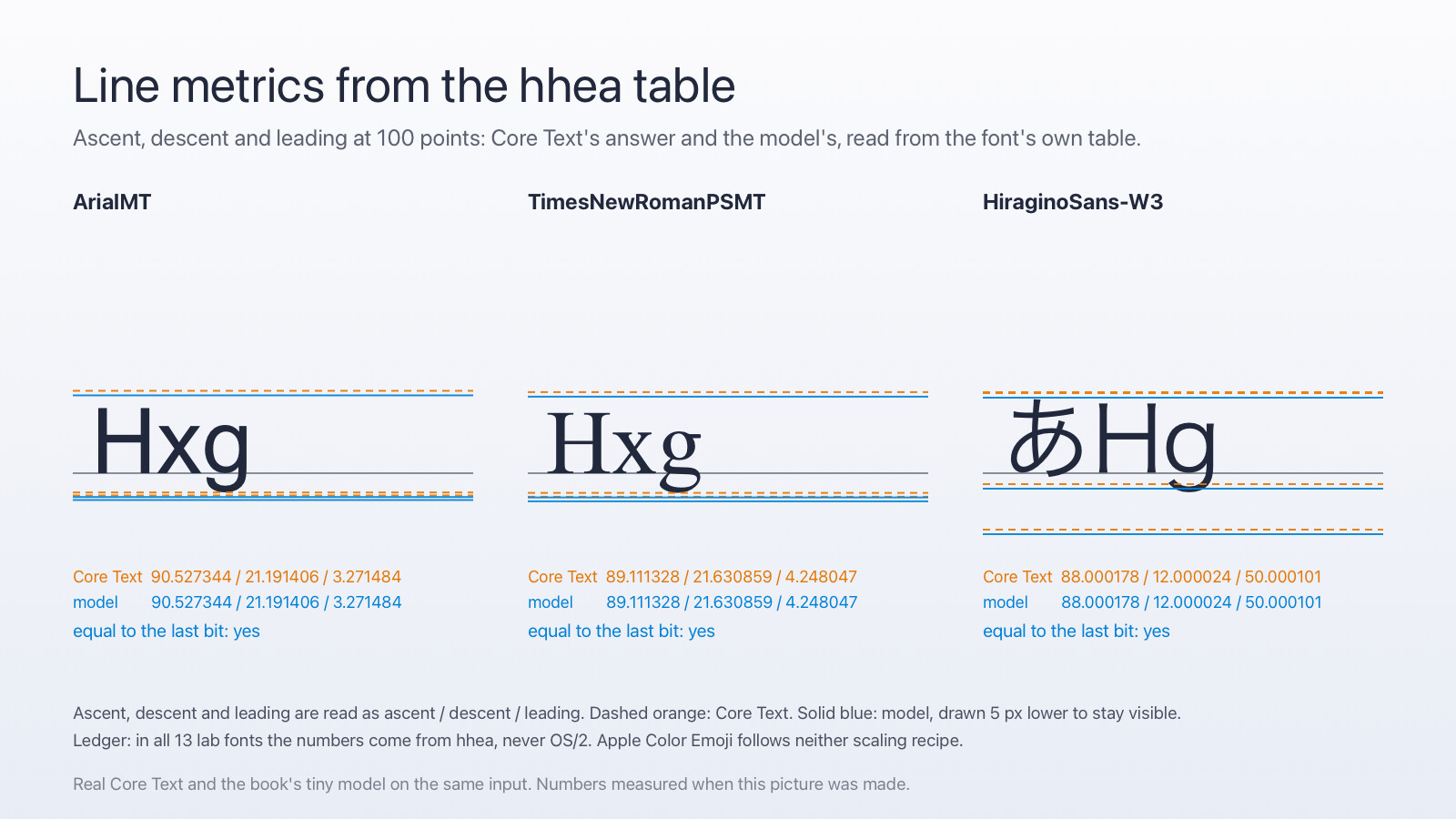
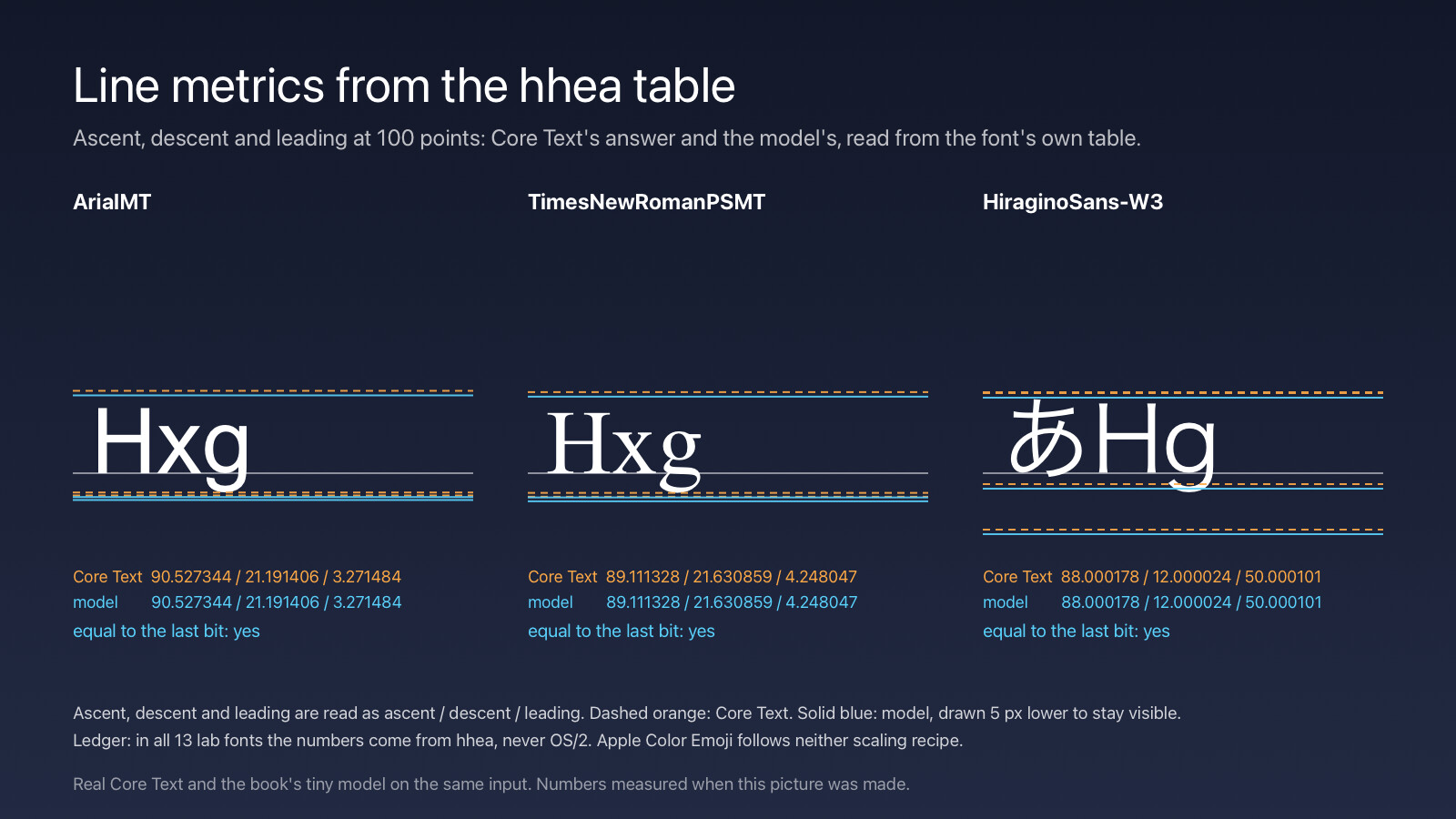
How a framesetter stacks lines of text, where each baseline falls, and why the numbers a font reports are only the start.
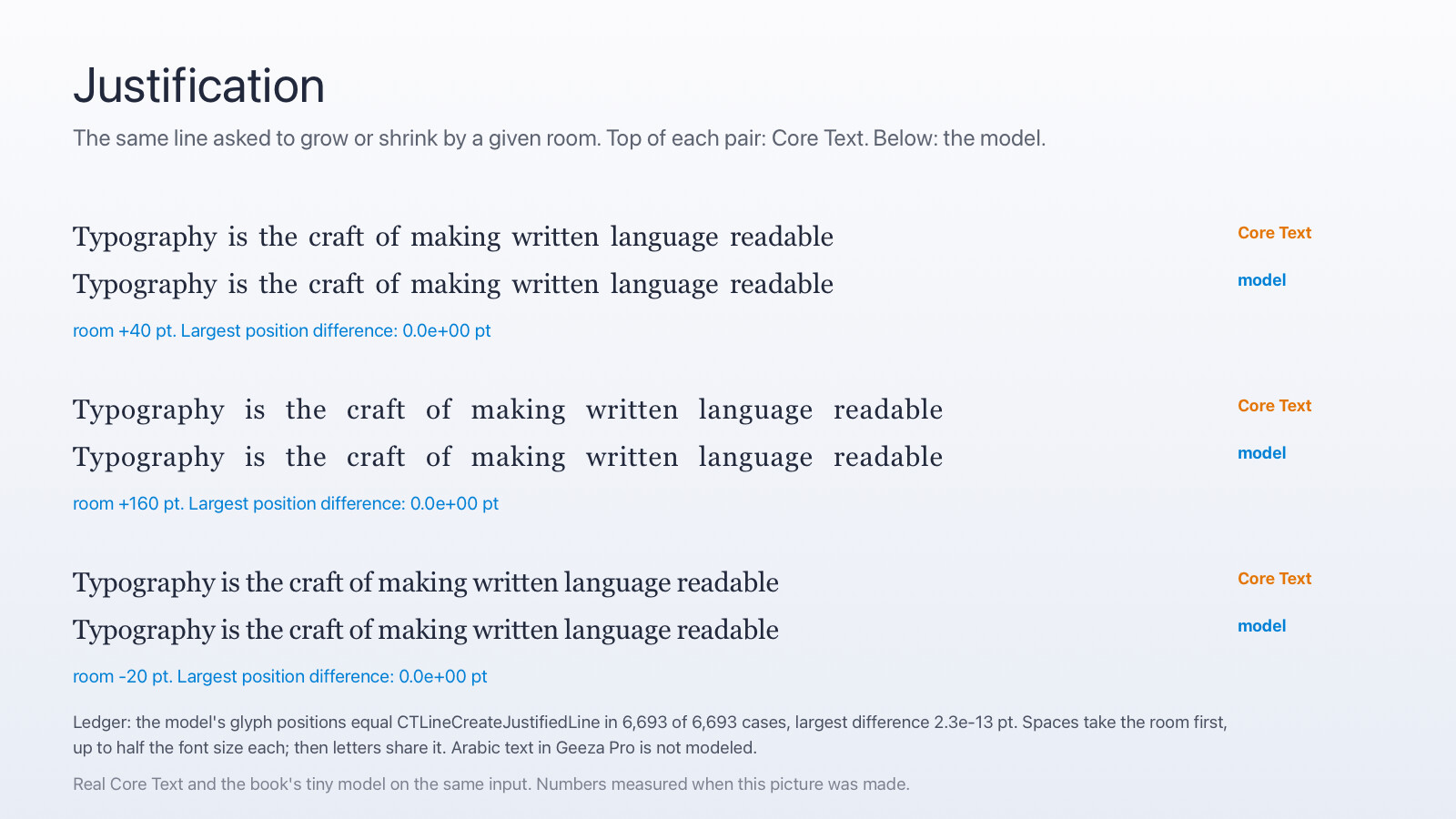
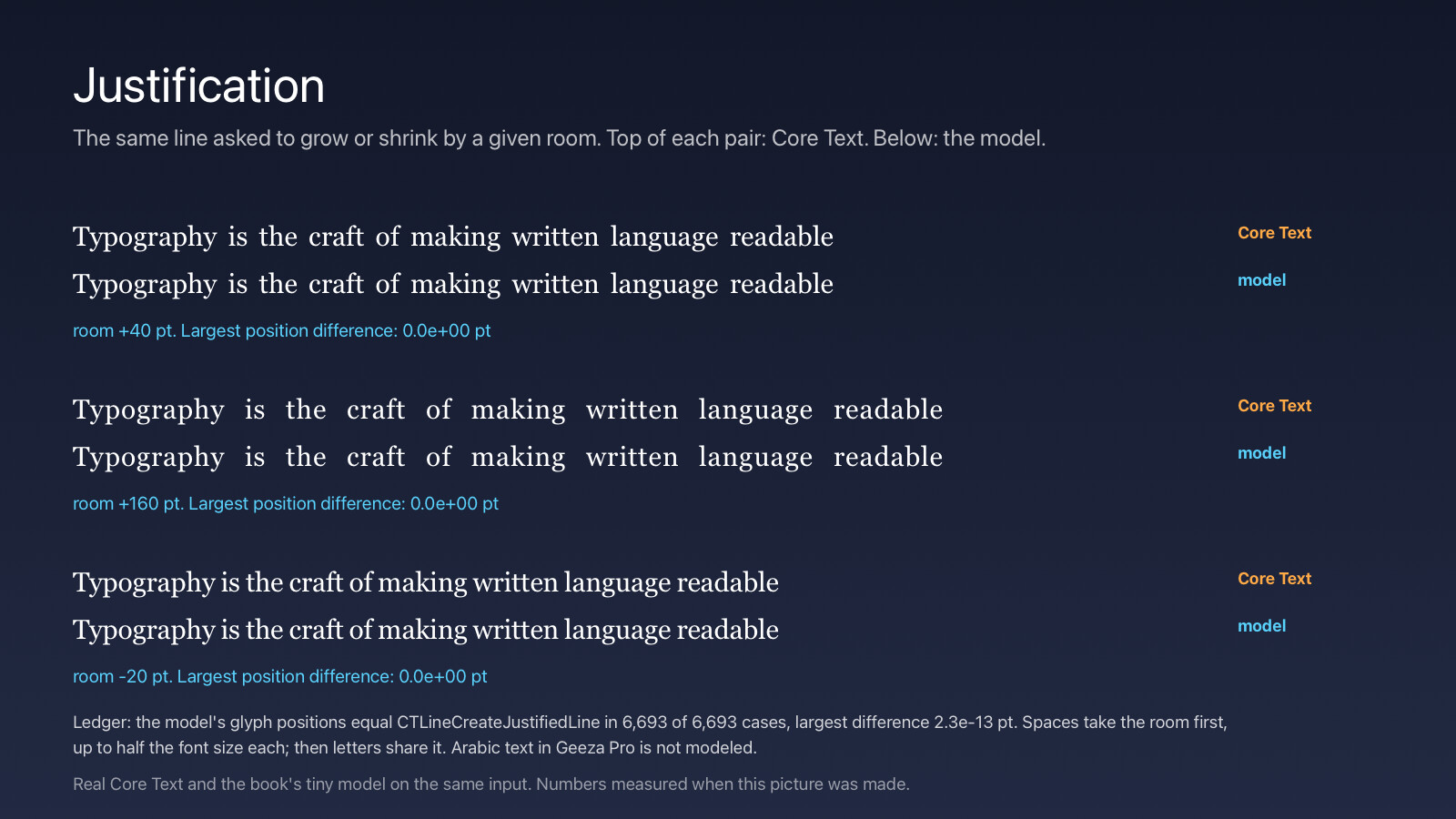
Where the leftover room on a line goes, and how to prove it.
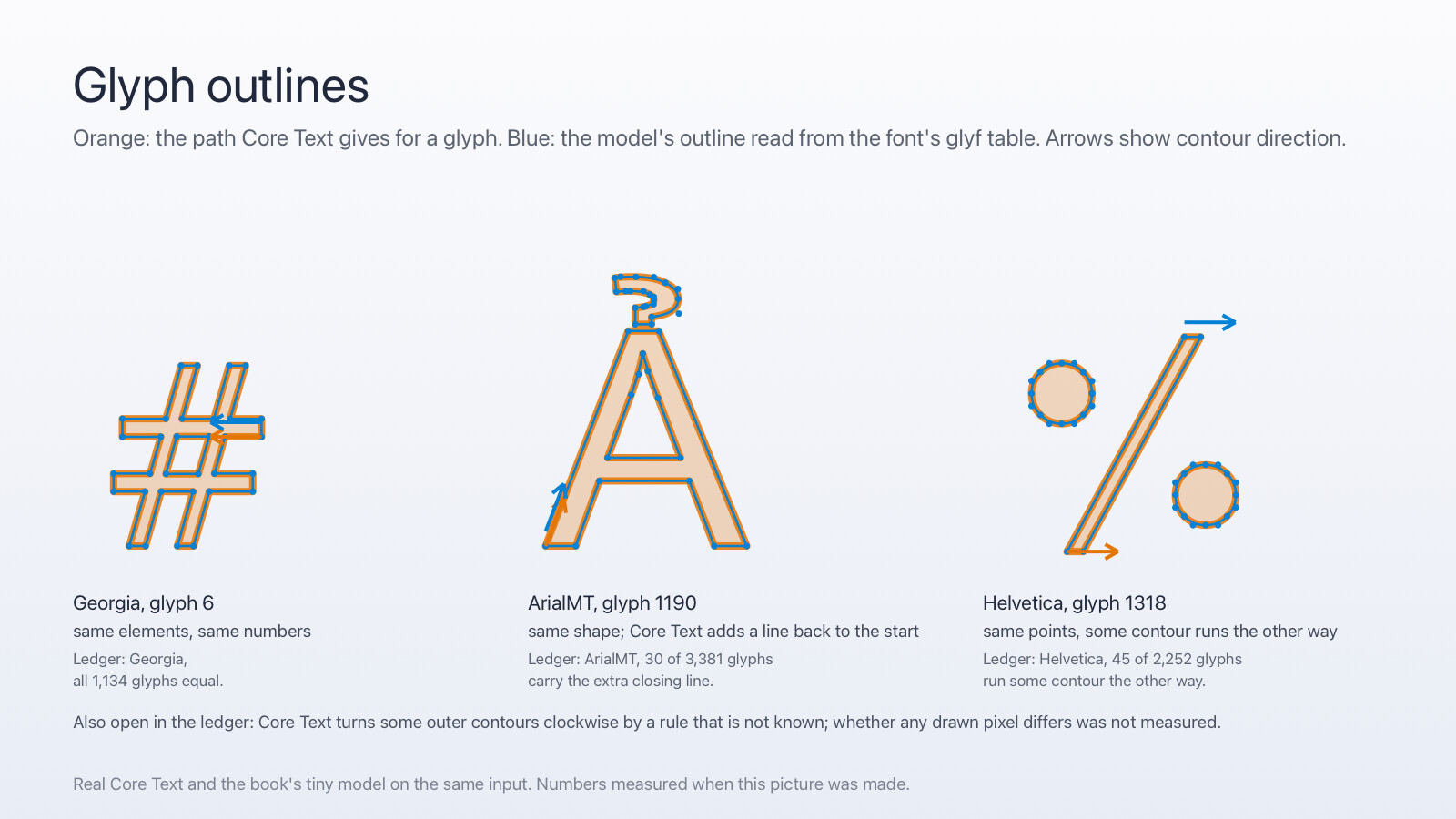
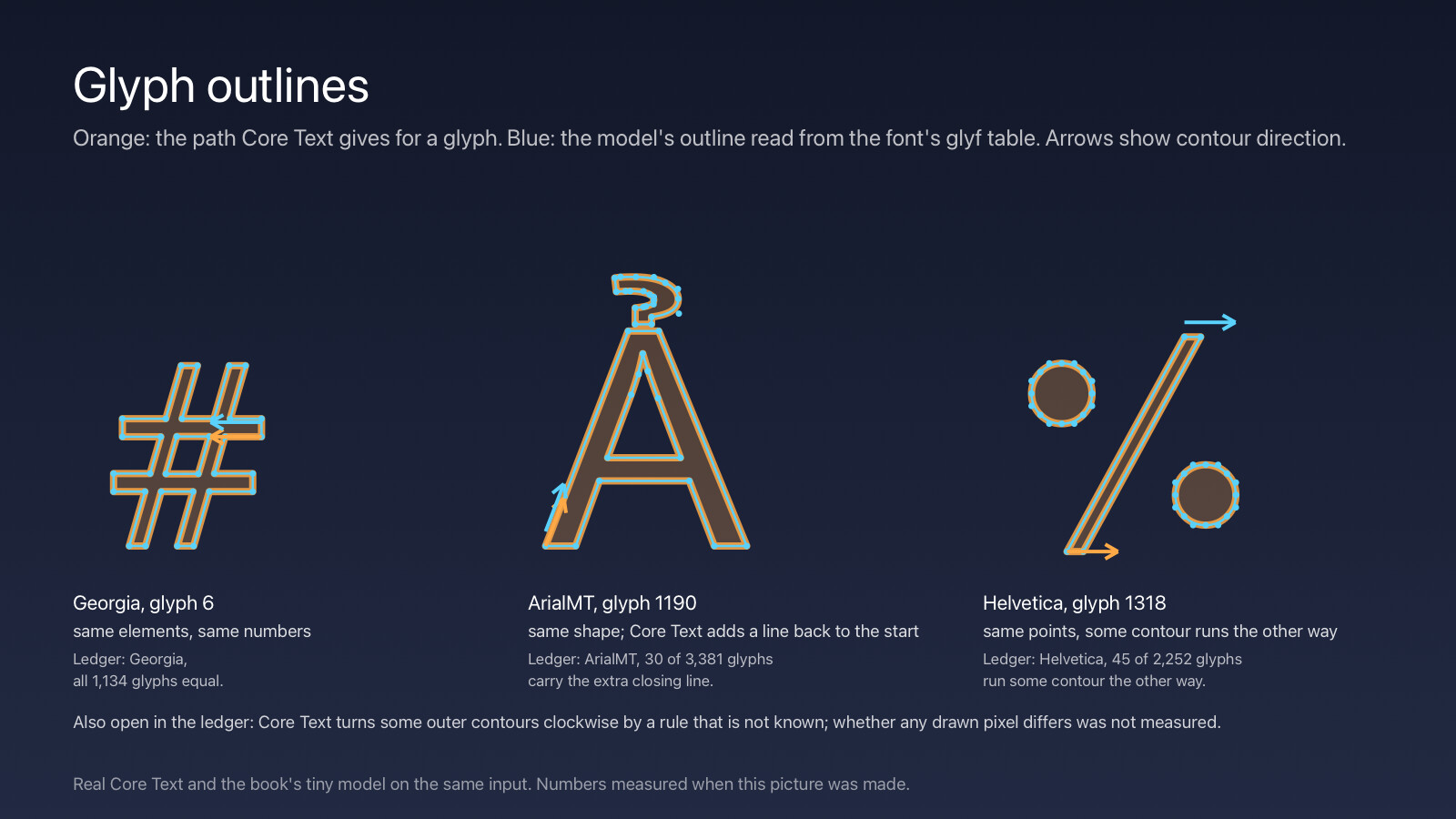
What happens between a glyph number and a pixel: the outline in the font, the curves cut into straight pieces, the fill, and the switches that move the result.
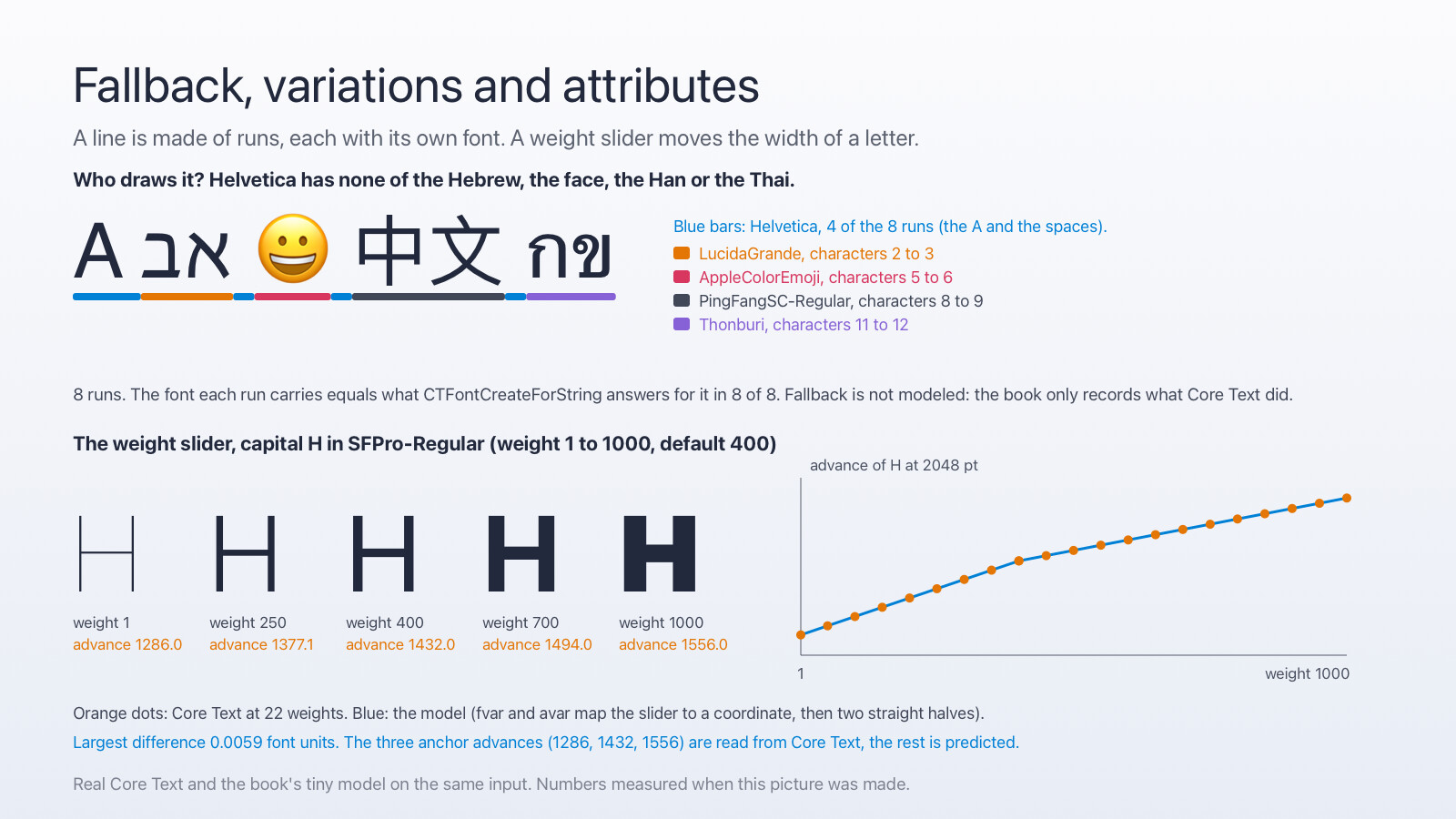
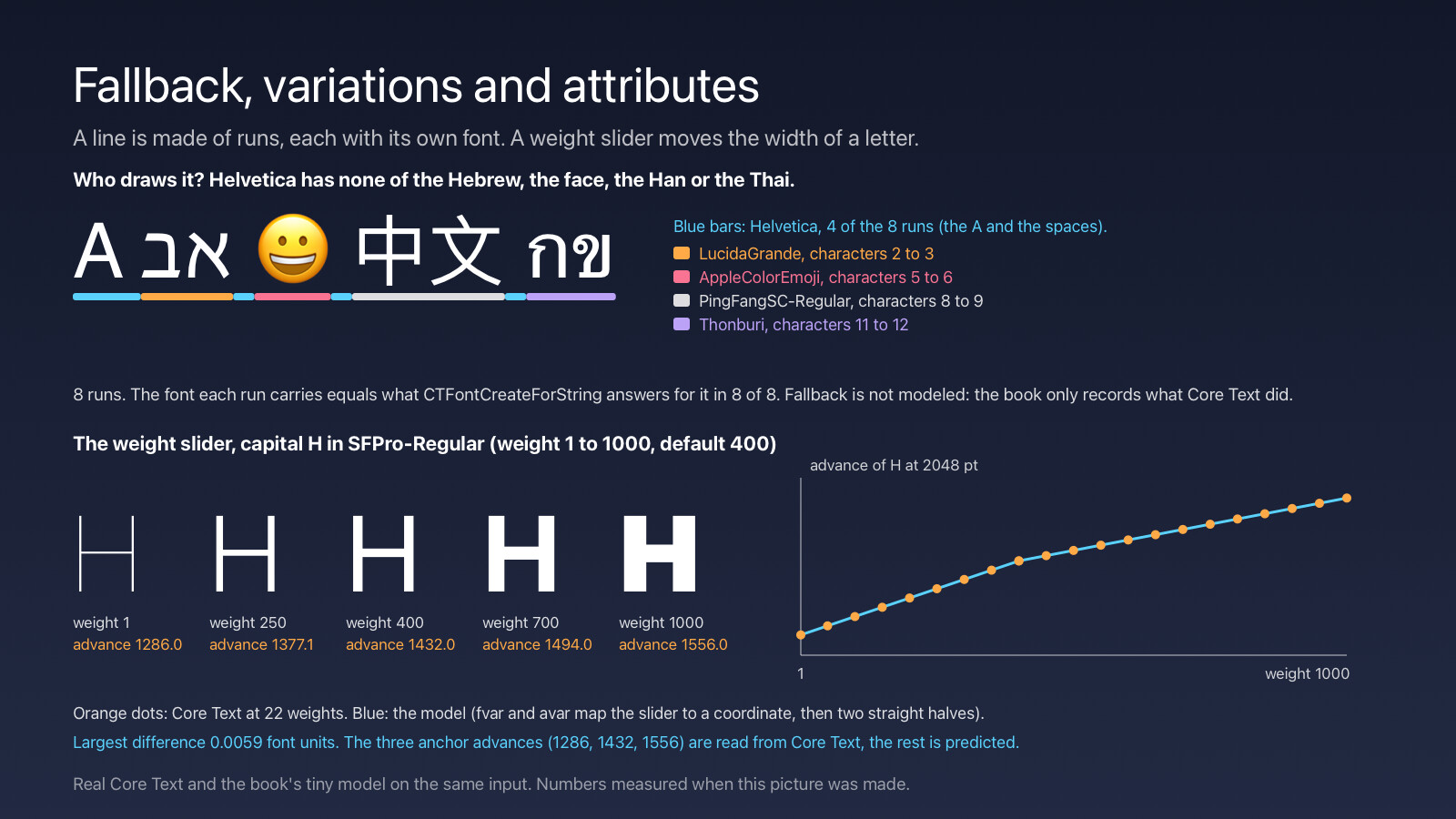
Who draws a character the font does not have, what a weight slider does to the width of a letter, and what a line does when its text carries more than one font.
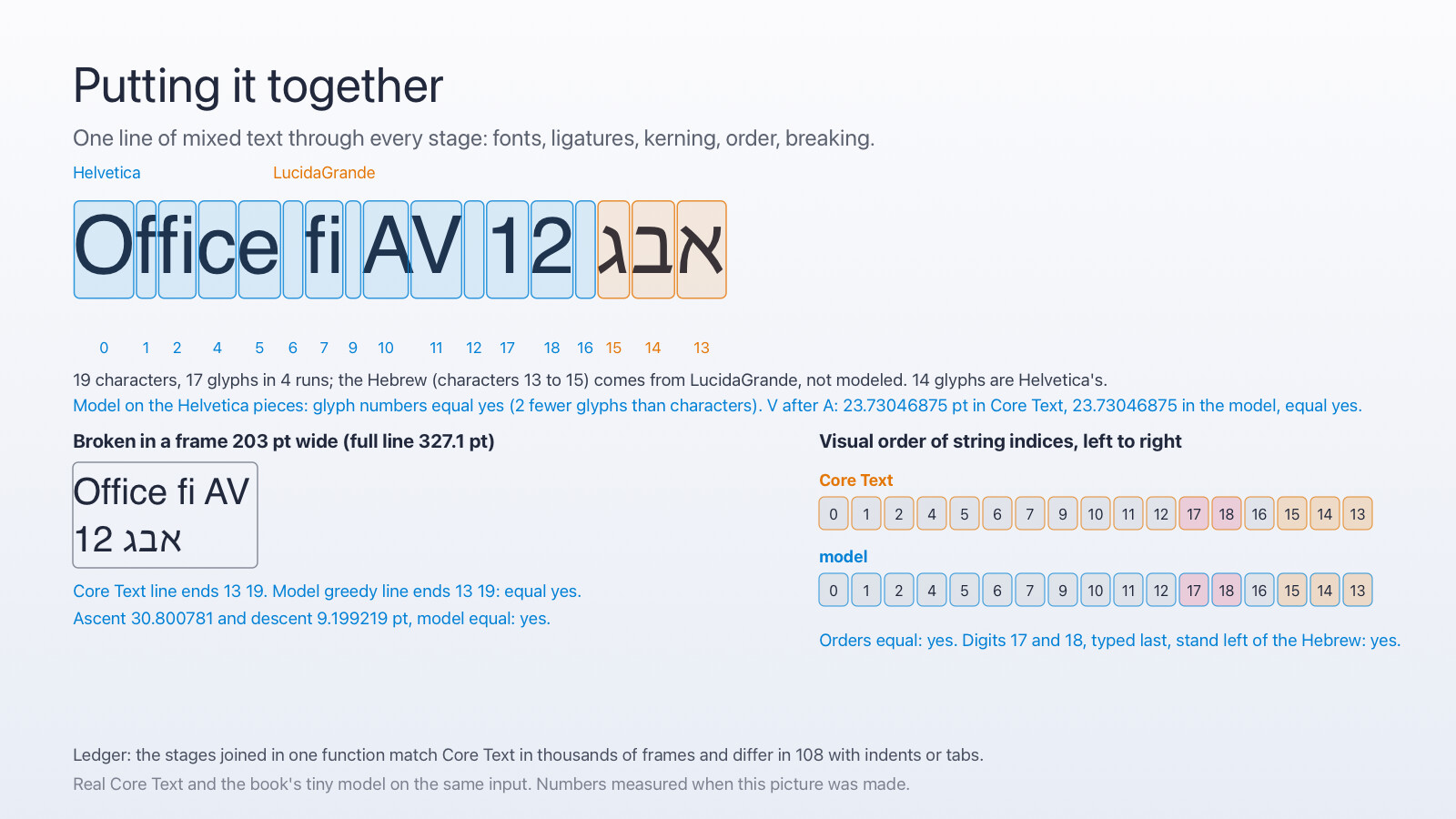
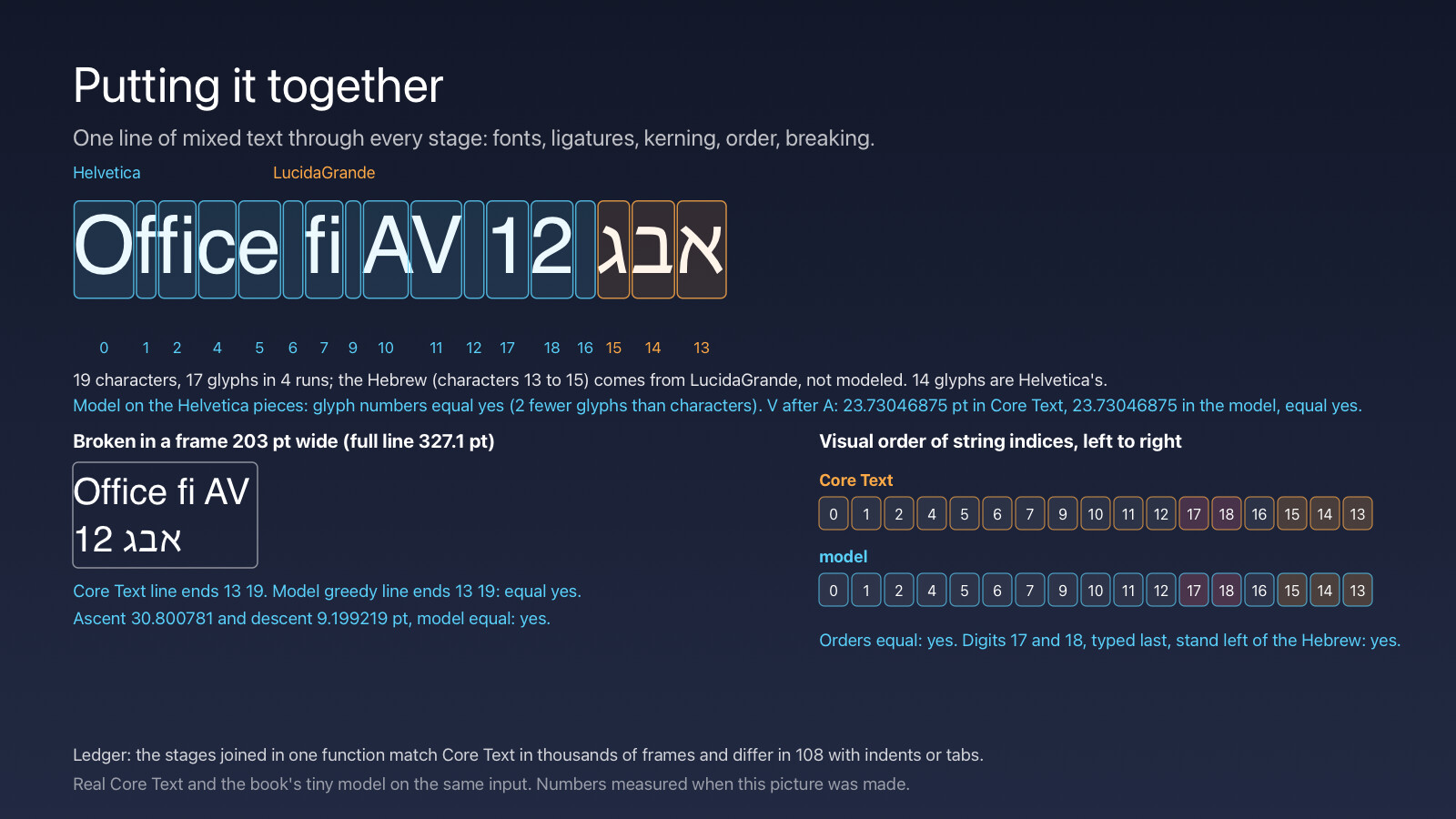
One line of mixed text through every stage, a playbook of symptoms, and the honest edge of what this book measured.